
 (1).svg)
 (1).png)


 (1).svg)
.svg)
When you host your email on your domain with a dedicated SMTP server, you gain significant control and flexibility. This approach allows you to select an email address that perfectly aligns with your business or personal brand. Furthermore, all your valuable data is securely stored on a server or hosting account that only you can access, ensuring privacy and data ownership. Should you ever decide to transition to a different hosting provider, the process is straightforward, as you are not bound by the limitations of a locked-in hosted service.
Despite these advantages, many individuals and businesses hesitate to host their own email, primarily due to the perceived complexity of setting up an email server independently. This often involves delving into intricate concepts such as SMTP, IMAP, Exim, mail routing, and more. However, for users of cPanel & WHM, this challenge is significantly simplified. These platforms provide intuitive tools that enable you to quickly set up and connect to email accounts using SMTP. For the vast majority of cPanel users, sending mail via their server is as simple as establishing an email account and configuring their preferred email application.
This comprehensive article will guide you through that very process. We will walk you through setting up an email account and demonstrate how to configure your applications using cPanel’s SMTP settings. Additionally, we will explore some of the most frequently encountered email errors and provide practical solutions to help you resolve them efficiently.
What is SMTP?
SMTP, or Simple Mail Transfer Protocol, is the fundamental communication protocol that applications utilize to transmit email across the internet to mail servers. When you click the “send” button in your email application—be it Apple Mail®, Microsoft Outlook®, Thunderbird®, or any other email client—the application initiates contact with a server, authenticates itself, and attempts to deliver the messages from its outbox. The server to which your application sends mail is referred to as the outgoing mail server, and the software it connects with is known as a Mail Transfer Agent (MTA).
The MTA on the server receives messages from the email application, places them into a queue, and then forwards them to the recipient’s MTA. The recipient's MTA is then responsible for delivering the message to their inbox. cPanel integrates a powerful mail transfer agent called Exim, and like all MTAs, it employs SMTP to facilitate communication with mail clients and other MTAs. This is why MTAs are frequently referred to as SMTP servers.
Generally, cPanel users do not need to directly configure Exim or delve into the intricate details of SMTP, as cPanel expertly manages these complexities behind the scenes. However, it may become necessary to adjust certain configuration settings if you or your users encounter email-related errors or delivery issues, requiring a deeper understanding of the system.
Before we delve into troubleshooting, let’s begin by exploring the foundational steps of setting up an email account on your server and configuring your email client to send messages to the MTA via SMTP.
How to Set Up SMTP in cPanel
The cPanel SMTP setup process is straightforward and typically involves two primary steps:
- Creating an email account directly on your server.
- Entering the account’s server and authentication information into your chosen email client.
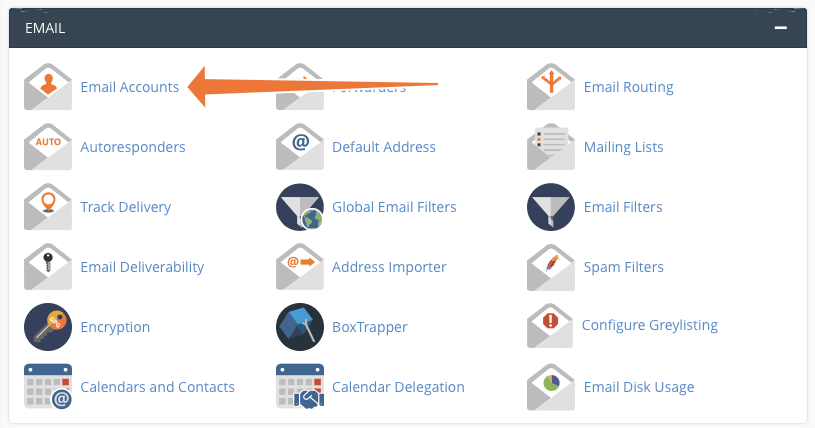
First, let's proceed with creating a new email account. In cPanel, navigate to the Email Accounts interface, which you will find conveniently located within the Email section of the main page menu.
Click the “Create” button to initiate the new account setup.
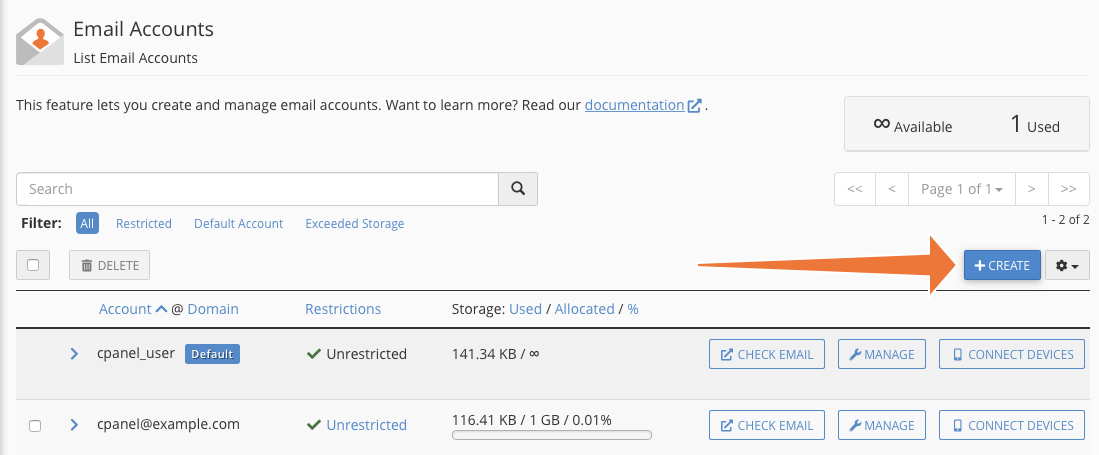
On the subsequent page, you will be prompted to select a domain, choose a username for the email account, and establish a strong password. After entering these details, click the Create button at the bottom of the page, and cPanel will automatically generate your new email account.
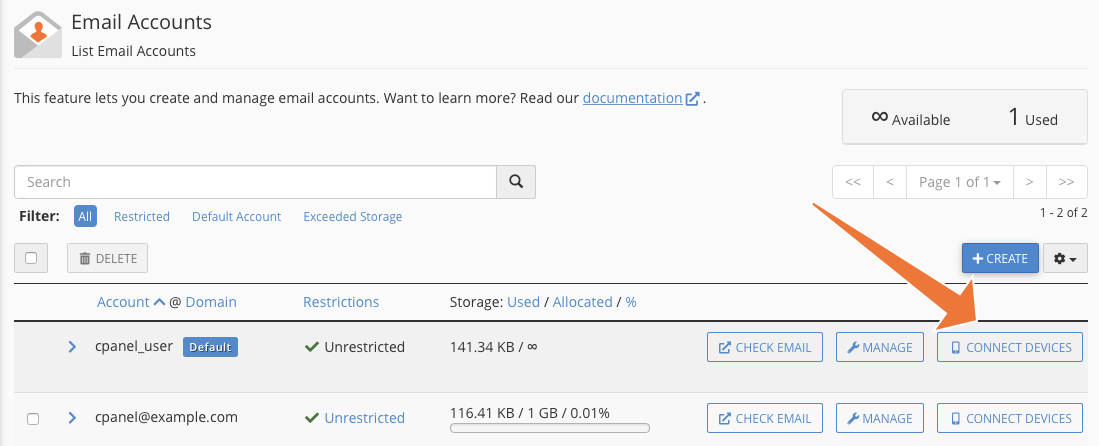
The next crucial step is to configure your email client so it knows which server to connect to and how to properly authenticate. The necessary cPanel SMTP settings are readily available within the Connect Devices interface.
On this page, you will find essential details such as the username, the URL of the outgoing server, and the corresponding SMTP port number. These are the critical pieces of information you will need to input into your email application.
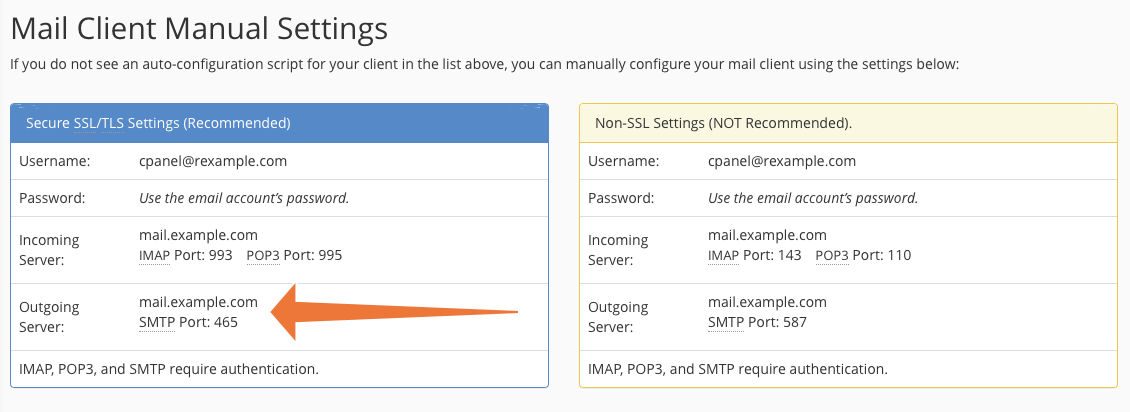
For enhanced security and to protect your communications, we strongly advise using the more secure SSL/TLS details rather than the less secure Non-SSL settings. Utilizing SSL/TLS encrypts the connection between your email client and the server, safeguarding your credentials and message content.
While numerous mail clients are available, the process of configuring them to send messages through your server is generally quite similar and straightforward. For your convenience, here are links to the official setup documentation for popular clients like Apple Mail on macOS and Thunderbird, which can provide specific instructions for their respective platforms.
Troubleshooting Common SMTP Errors in cPanel
Ideally, you can now seamlessly send messages from your personalized email address via your server. However, email systems can be intricate, and it's not uncommon for misconfigurations to lead to authentication or mail delivery issues. When problems arise, it's important to understand the typical error messages.
SMTP errors frequently manifest as undelivered messages. You might attempt to send an email, only to receive an immediate response containing an often cryptic error message accompanied by a numerical code. In the remainder of this article, we will examine how you, or your hosting provider, can effectively diagnose and resolve a couple of the most common SMTP errors encountered in cPanel.
Error 421 – Too Many Concurrent SMTP Connections
Exim, cPanel's integrated Mail Transfer Agent, implements a limit on the number of simultaneous SMTP connections it permits. This measure is crucial for preventing the server from becoming overwhelmed by excessive requests. However, on a heavily trafficked server, the default cPanel setting of 100 concurrent connections might prove to be insufficient, leading to "Error 421" messages.
This connection limit is controlled by the “smtp_accept_max” directive within Exim’s configuration file. You can adjust this value in WHM by navigating to the Exim Configuration Manager, located under Service Configuration in the sidebar menu.
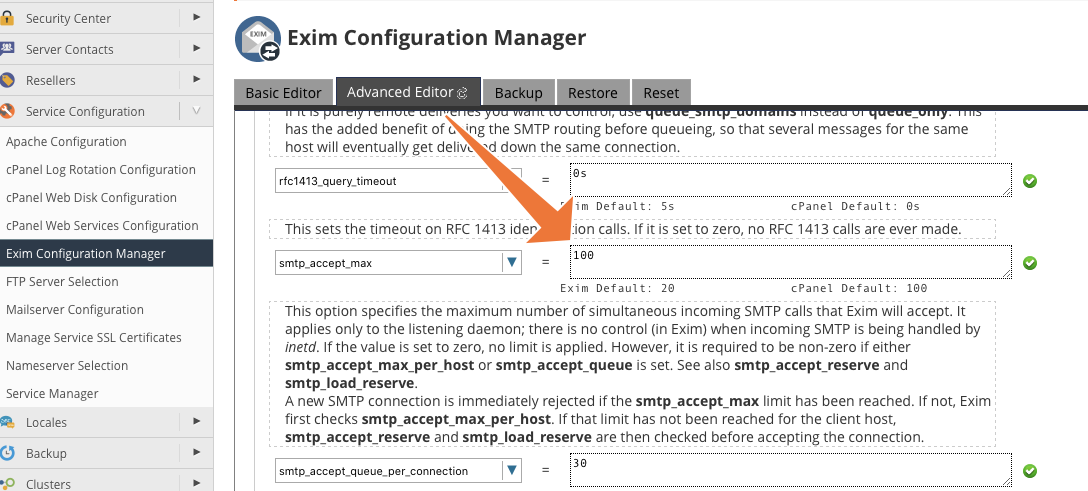
Select the Advanced Editor tab and then search for “smtp_accept_max.” You can cautiously increase this value to accommodate more connections. However, it is vital to exercise caution: setting this value too high can potentially cause the mail server to exhaust its memory resources and crash, impacting all email services.
Error 550 – Please Turn on SMTP Authentication in Your Mail Client
When your mail client attempts to send messages, it must provide authentication credentials over a secure connection. This security measure is essential; without proper authentication, any entity could connect and send messages through your server, quickly turning it into a haven for spammers. Therefore, the client must verify its legitimacy as an authorized sender for that specific account.
You will typically receive an Error 550 message when there is an issue with this authentication process. Several potential factors can contribute to this error.
Misconfigured SMTP Client Authentication
Most frequently, Error 550 arises from either a misconfiguration within the email client itself or the use of an outdated client that lacks the capability to establish a secure SMTP connection. This is often the case if only a single user or a limited number of users are experiencing the error, suggesting a client-side issue rather than a server-wide problem.
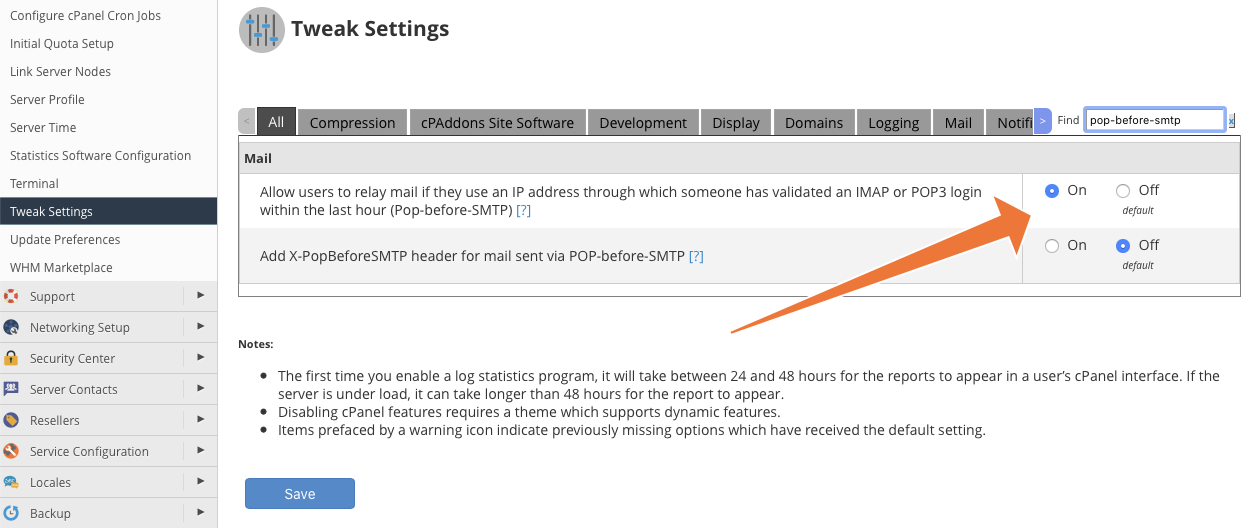
The most effective solution is to ensure you are using a modern email client configured with the correct authentication details. If upgrading or reconfiguring the client isn't feasible, WHM offers a settings tweak that allows SMTP connections from users who have previously authenticated using POP or IMAP—the protocols traditionally used for collecting messages from the server.
To enable this tweak, navigate to the Tweak Settings interface, which is located under Server Configuration in the WHM sidebar menu. Search for “Pop-before-SMTP” and then activate this tweak.
Incorrect Email Routing for the Domain
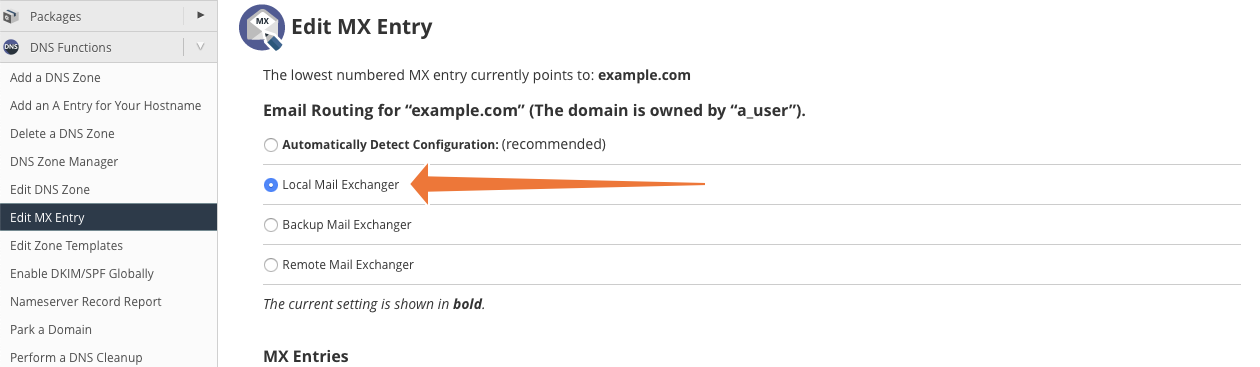
If a user encounters a 550 error when attempting to send a message to an account hosted on your server, it often indicates an issue with the domain’s mail routing configuration. Typically, this occurs because the domain is mistakenly configured to utilize a remote mail exchanger instead of the local mail exchanger present on your server.
To ensure that emails for the domain are correctly routed through the local mail exchanger, navigate to Edit MX Entry within the DNS Functions section of the WHM sidebar menu. Choose the relevant domain from the list and click Edit. Then, verify that Local Mail Exchanger is selected as the routing option.
Another potential cause of routing issues can be misconfigured MX records for the domain. These critical DNS records specify where mail for a particular domain should be delivered. You can use the “dig” command-line tool to quickly check if your MX records point to the correct IP address or hostname.

In the example above, we first use the dig command to inspect where the MX records for our domain are pointing. Subsequently, we verify that the domain name record itself includes the expected IP address, ensuring consistency in mail routing. This step is crucial for diagnosing and rectifying mail delivery problems.
While we have covered the most common causes of 550 errors, there are a few less frequent culprits. For a more in-depth exploration and additional troubleshooting tips, we recommend consulting our detailed SMTP authentication error troubleshooting tutorial.
Take Control of Your Email with cPanel
Email remains an indispensable component of your brand identity and serves as a vital communication channel with your customers and colleagues. By choosing to host your own email, you empower yourself with complete control over both your brand messaging and your valuable data. With the robust tools provided by cPanel & WHM, setting up and efficiently managing a private email account is remarkably straightforward and accessible for users of all technical levels.
As always, your feedback and comments are incredibly valuable to us. Please do not hesitate to share your thoughts or any questions you may have; we are always eager to assist in the most effective ways possible. You can find our community and support resources on Discord, the official cPanel forums, and Reddit.