
 (1).svg)
 (1).png)


 (1).svg)
.svg)
Effectively managing database backups is crucial for any organization using Odoo 18 to ensure business continuity and data integrity. Automated database backup solutions for Odoo 18 are specifically designed to streamline this essential process, offering robust and flexible options for safeguarding your valuable data. These systems typically allow backups to be stored in a variety of secure locations, ranging from local and remote servers to widely used cloud storage platforms like Google Drive, Dropbox, OneDrive, Nextcloud, and Amazon S3.
Key Features
- Automated Backups: Implement scheduled, regular backups of your Odoo databases, ensuring continuous data safety and minimizing the need for manual intervention. This proactive approach helps in maintaining up-to-date data recovery points.
- Efficient Storage Management: Automate the removal of outdated backup files to prevent unnecessary consumption of storage resources, thereby optimizing disk space and ensuring that storage remains efficiently utilized.
- Real-time Notifications: Stay informed about the status of your data protection measures with instant alerts on the success or failure of each backup operation. This feature allows for prompt action in case of any issues.
- Flexible Storage Options: Benefit from a wide array of storage destinations, providing the versatility to select the most suitable option for your operational needs. This includes secure local and remote servers, alongside popular cloud platforms.
- Customizable Backup Frequency: Define specific backup frequencies and destinations tailored to your business requirements. You can configure backups to run daily, weekly, or monthly, providing a comprehensive data retention strategy.
Setting Up the Automatic Database Backup Solution
1. Installation of External Dependencies
Prior to deploying the automatic database backup functionality, it is essential to install several critical Python packages. These packages facilitate integration with various cloud storage and server protocols.
pip install dropbox
pip install pyncclient
pip install nextcloud-api-wrapper
pip install boto3
pip install paramiko
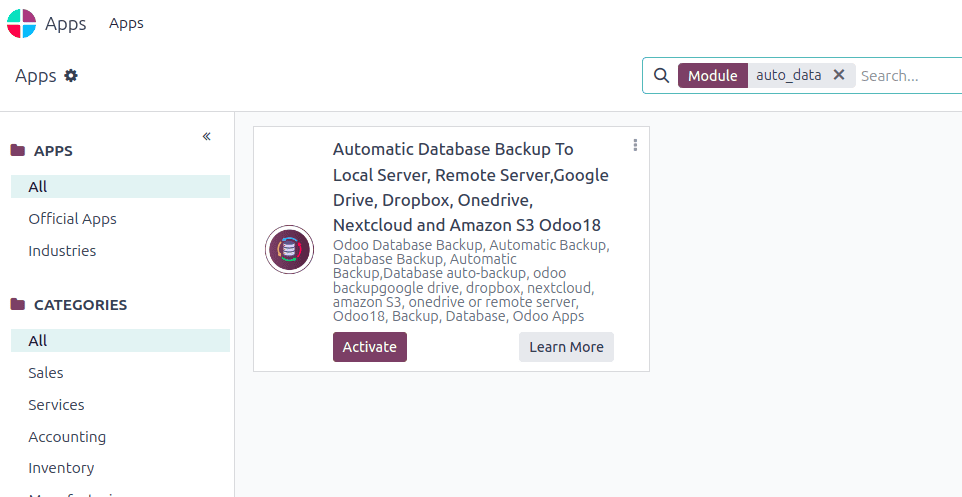
2. Module Installation
Once all the required external dependencies have been successfully installed, the next step involves deploying the Automatic Database Backup module directly into your Odoo environment. This integration will enable the features discussed previously.
3. Configuration
After installation, the module requires careful configuration to align with your specific data protection strategy. Follow these steps to set up your backup preferences:
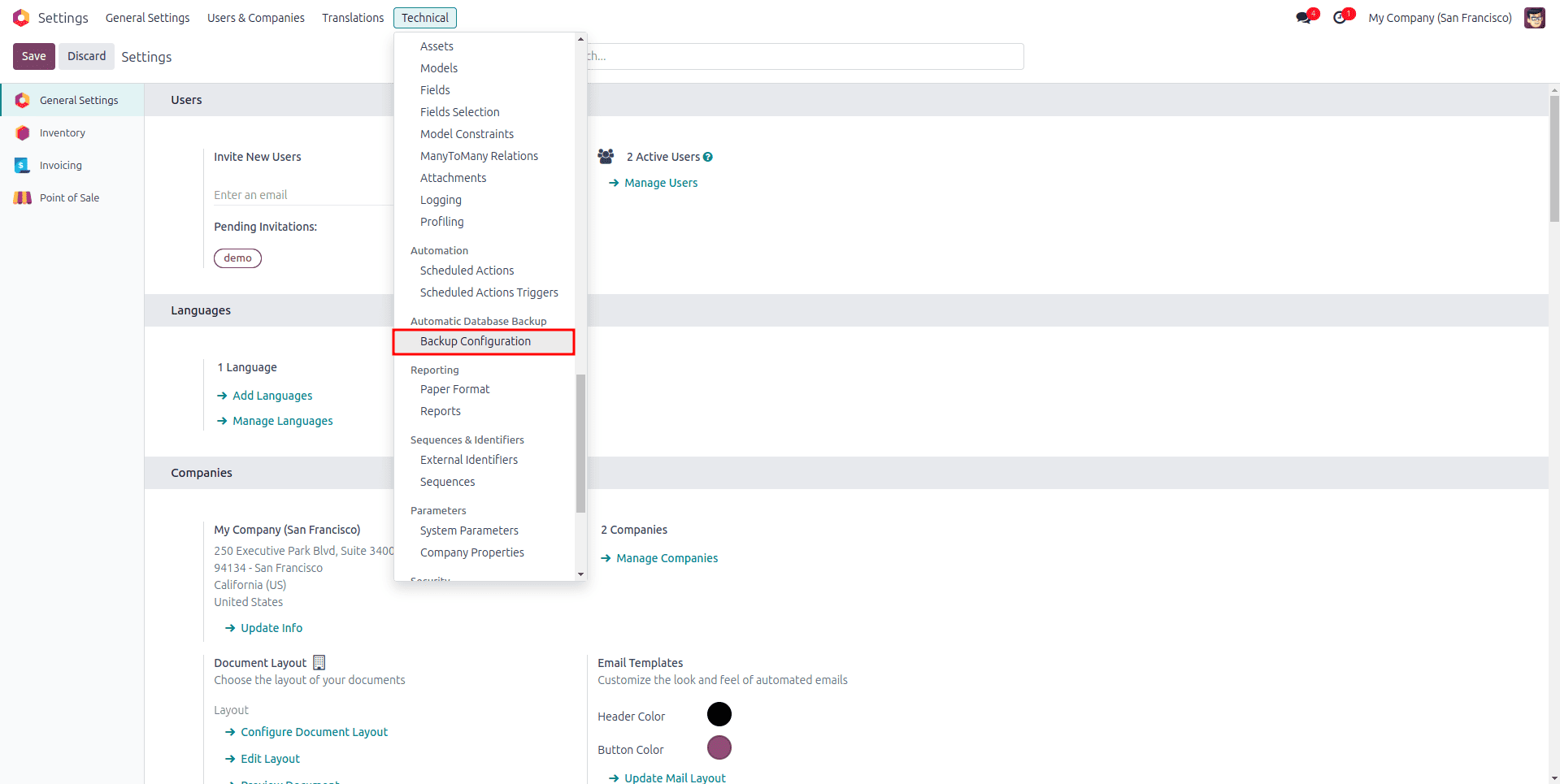
- Access Backup Configuration: Begin by navigating through the Odoo interface to Settings > Technical > Backup Configuration. This section serves as the central hub for defining all your backup parameters.
- Create a New Backup Configuration: Initiate a new backup setup by clicking on the "Create" button. You will then be prompted to input several crucial details:
- Database Name: Clearly specify the exact name of the Odoo database that you intend to back up.
- Master Password: Input the master password associated with your Odoo instance. This is essential for accessing and securing the database.
- Backup Destination: Select your desired location for storing the backups from the available options. This can range from local storage to various cloud services.
- Backup Directory Path: Provide the absolute path to the directory where the backup files will be saved. The system will automatically create this directory if it does not already exist.
- Backup Frequency: Define how often the backup process should execute. Options typically include daily, weekly, or monthly schedules, allowing for consistent data protection based on your needs.
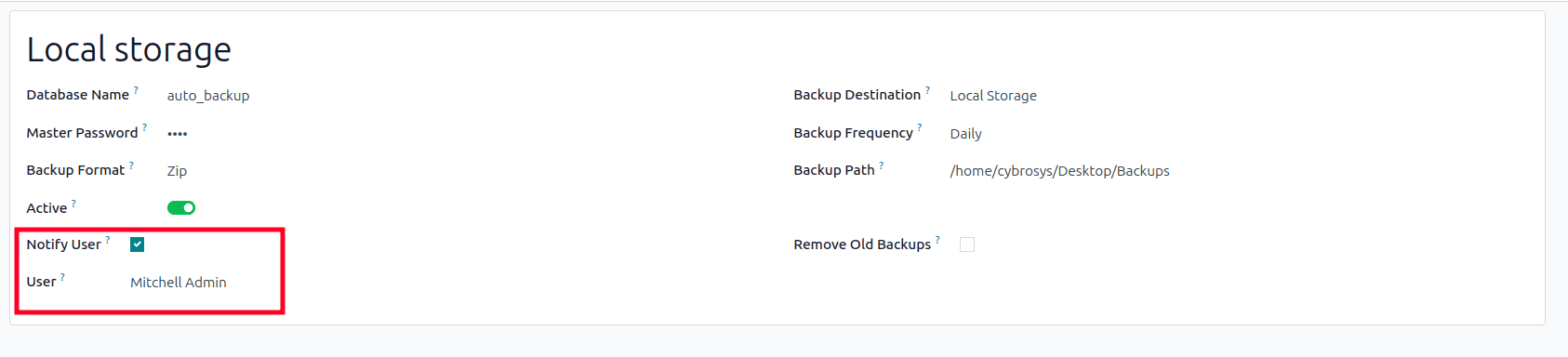
- Notify User: Activate the user notification feature and designate a specific user to receive alerts. This user will be sent an email notification upon the successful completion or failure of any backup operation.
- Remove Old Backups: Enable the automatic removal option to manage storage space efficiently. You can specify the number of days after which old backup files should be automatically deleted.
- Backup Format: Choose the desired format for your backup files, with common options being ZIP for compressed archives or Dump for raw database exports.
Configuring Backups to Diverse Destinations
The Automatic Database Backup module is engineered to seamlessly integrate with a variety of storage services, offering robust flexibility for your data retention strategy. Below are comprehensive guidelines for configuring backups across each supported platform, ensuring your Odoo data is securely stored wherever you need it.
Local Server
For organizations preferring on-premise solutions, configuring backups to a local server is a straightforward process. Simply select "Local Storage" as your backup destination within the Odoo configuration. Subsequently, provide the exact directory path on your server where you wish the backup files to be stored. This ensures that your data remains within your immediate infrastructure.

FTP Server
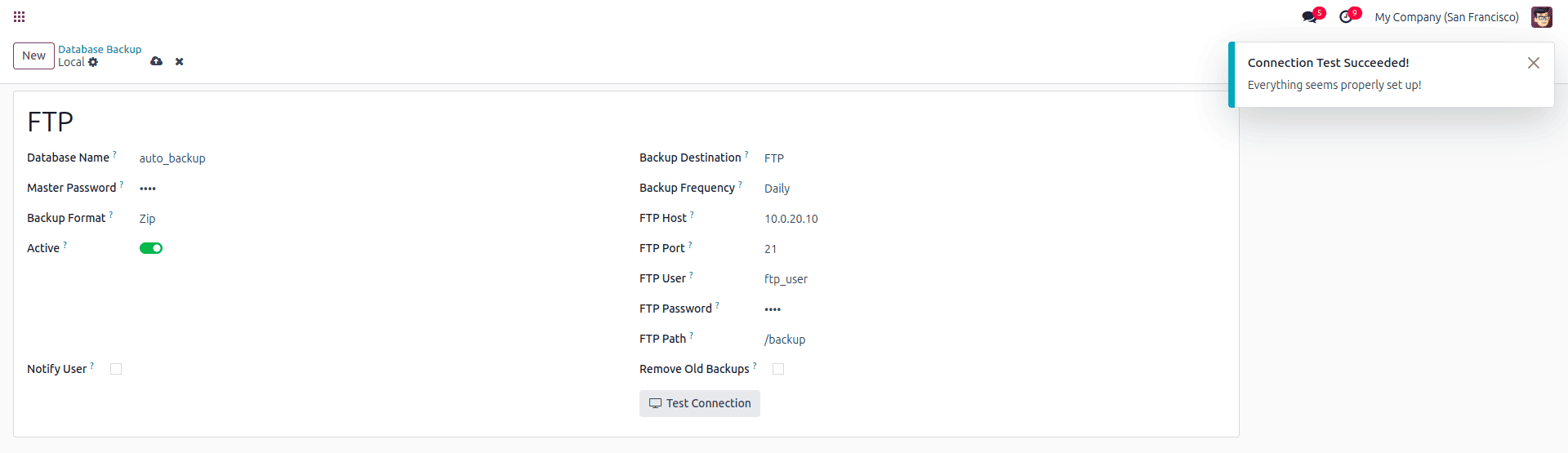
To leverage an FTP server for your Odoo database backups, follow these specific configuration steps:
- Select "FTP" as the designated backup destination within your Odoo setup.
- Accurately enter the FTP Host address, Port number, Username, and Password for your FTP server.
- Specify the precise FTP Path on the server where you intend for the backup files to reside.
- Crucially, utilize the "Test Connection" feature to verify that all settings are correct and that a stable connection can be established.
SFTP Server
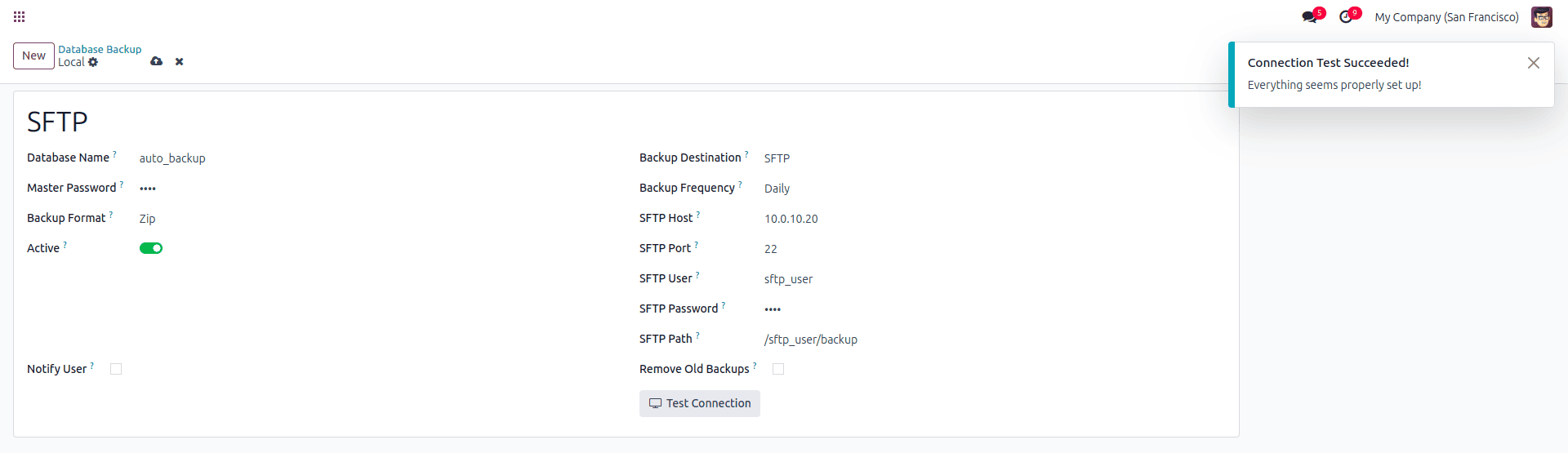
For enhanced security during data transfer, configuring backups to an SFTP server is recommended. The process is similar to FTP but with encrypted communication:
- Choose "SFTP" as your preferred backup destination in the Odoo configuration.
- Provide the SFTP Host address, Port number, Username, and Password for authentication.
- Indicate the specific SFTP Path on the server where your Odoo backups will be securely stored.
- Always perform a "Test Connection" to confirm that the SFTP setup is operational and secure.
Google Drive Integration
Integrating Google Drive as a backup destination offers convenient and scalable cloud storage for your Odoo databases. The setup involves creating a Google API project and configuring credentials.
Step 1: Create a Google API Project
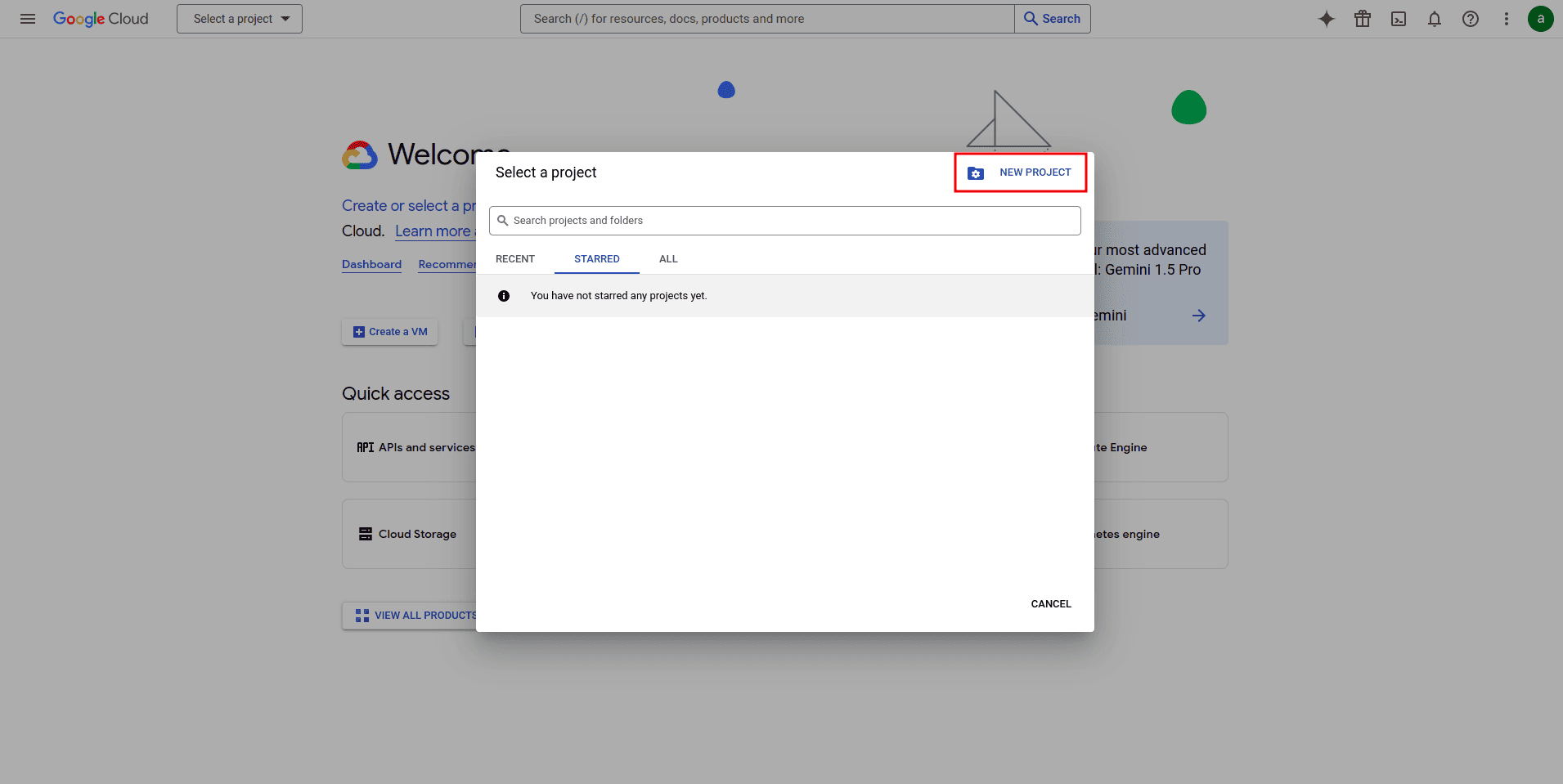
- Log in to the Google Cloud Console and proceed to create a new project dedicated to this integration.
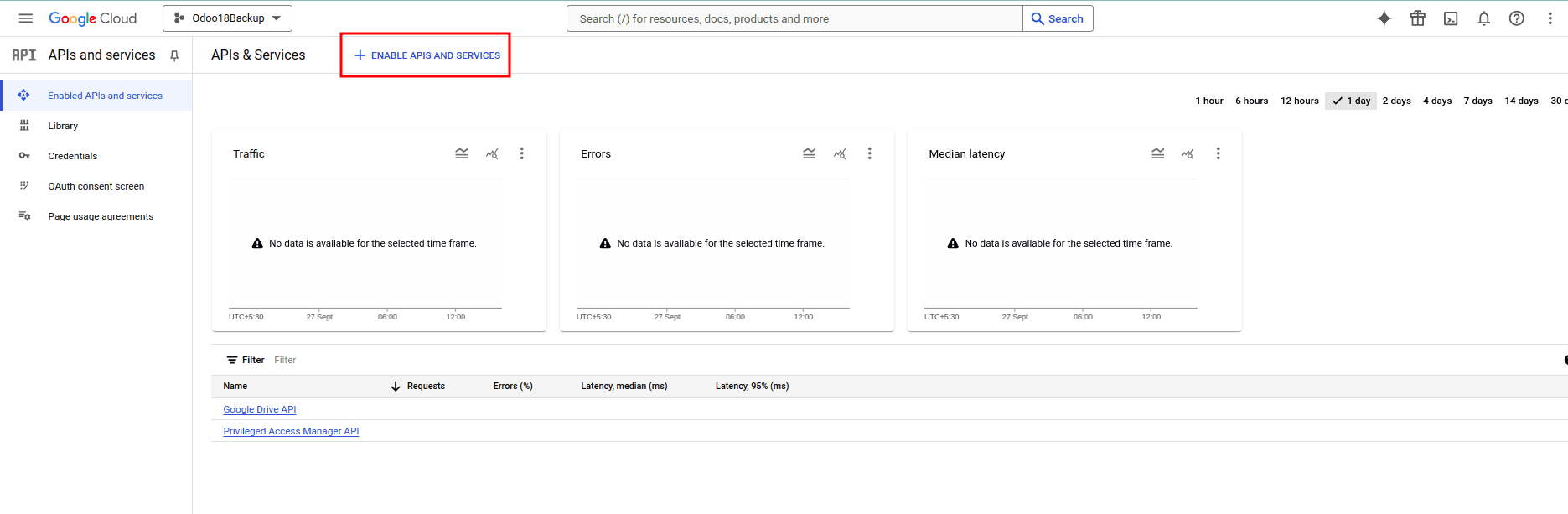
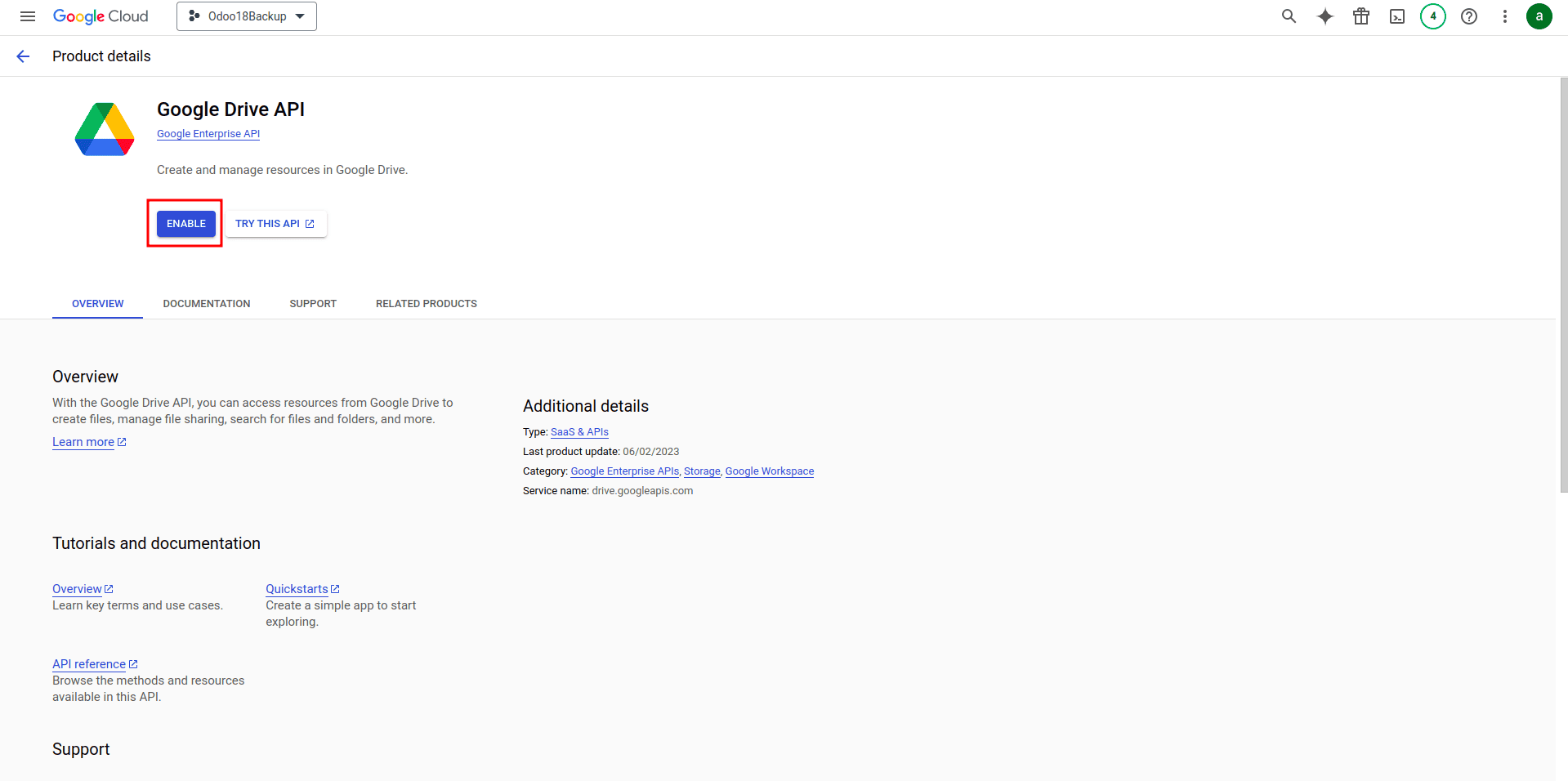
- Ensure that the Google Drive API is enabled for your newly created project.
Step 2: Create Credentials
- From your project dashboard, navigate to the "Enable API and Services" section.
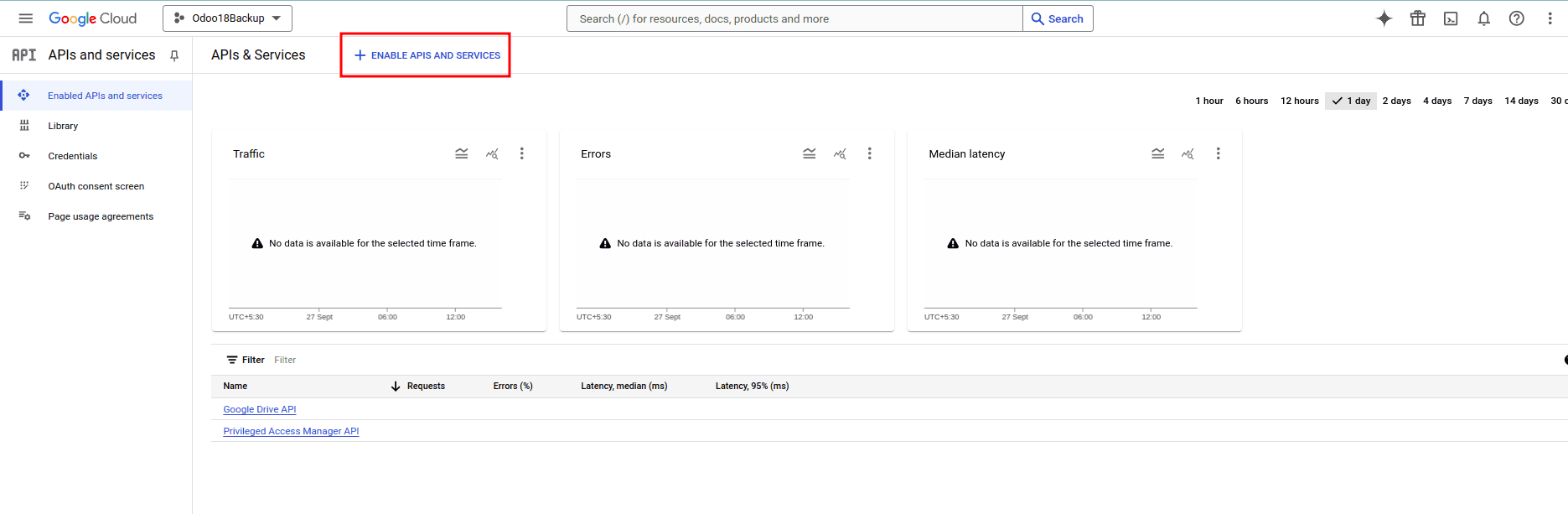
- Confirm that the Google Drive API is active.
- Proceed to "Credentials" and generate new credentials by selecting "OAuth Client ID".
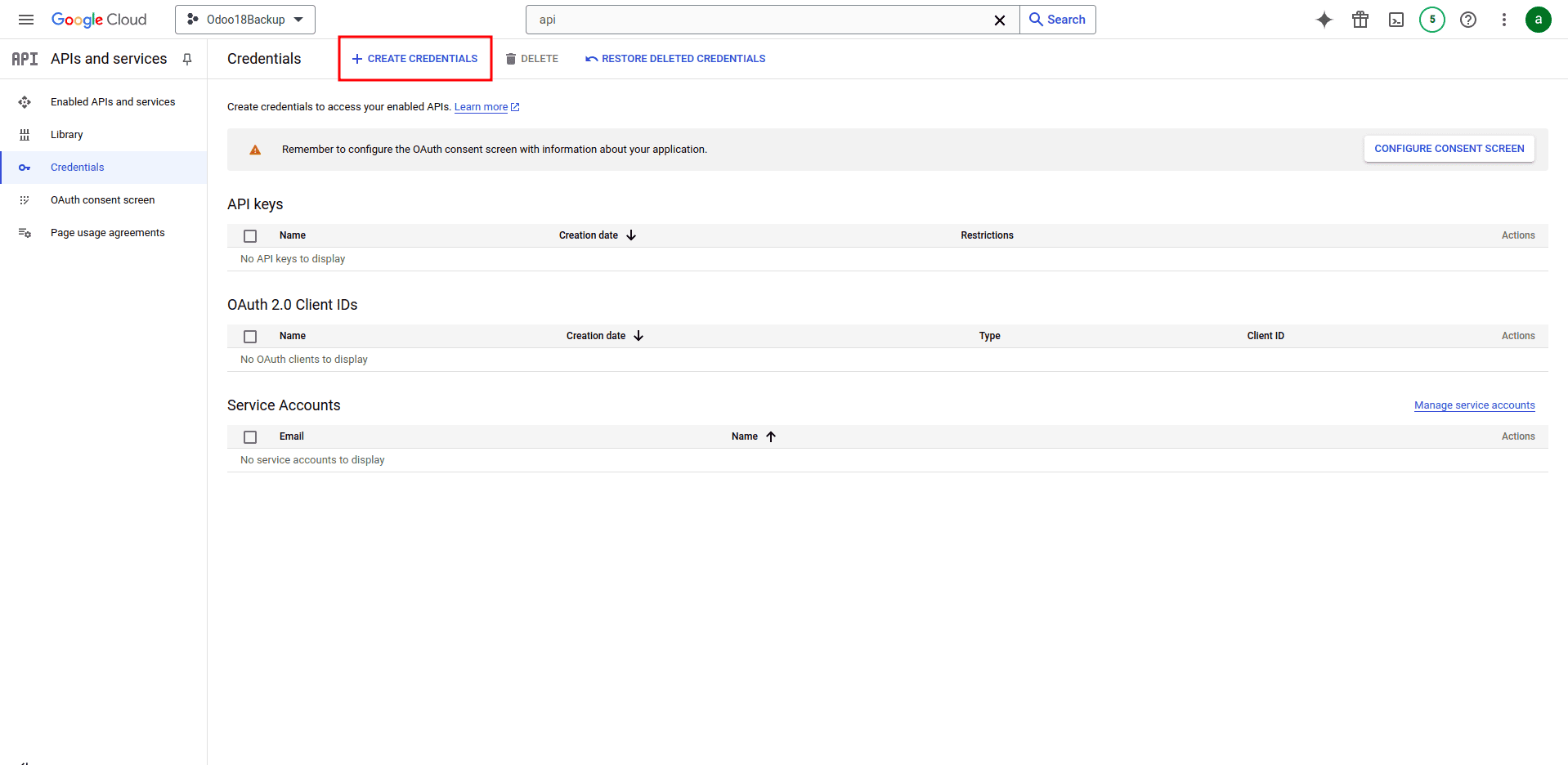
Step 3: Configure Authorized Redirect URI
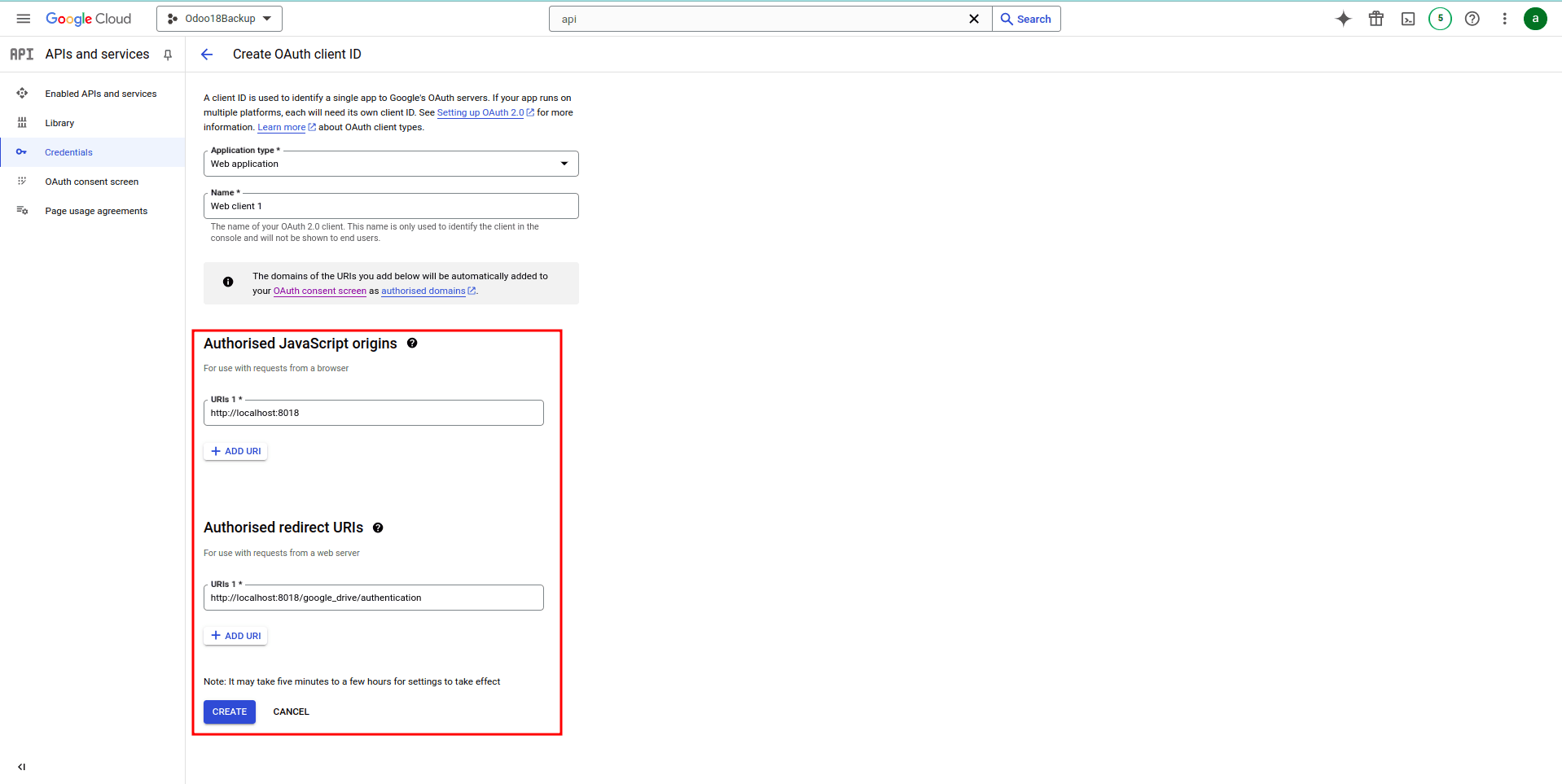
- Specify the Application Type as "Web Application".
- Under "Authorized JavaScript Origins," add the URL of your Odoo instance.
- For "Authorized Redirect URIs," input your Odoo URL followed by
/google_drive/authentication.
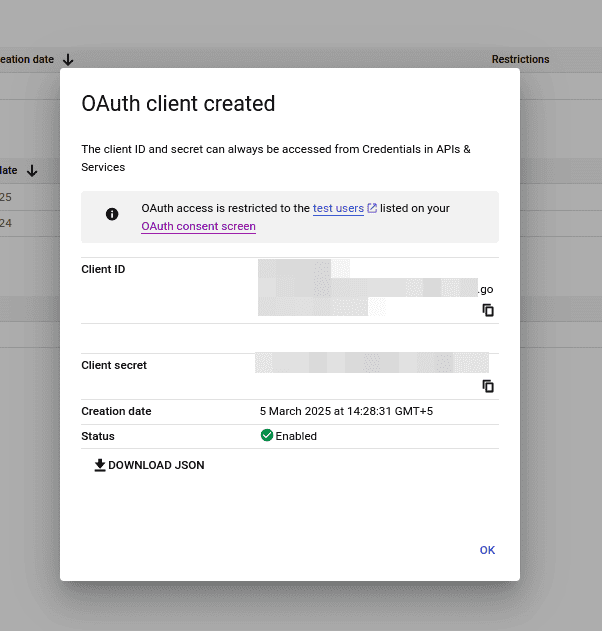
- Upon completing these steps, a Client ID and Client Secret will be generated. It is crucial to copy these credentials for subsequent use in Odoo.
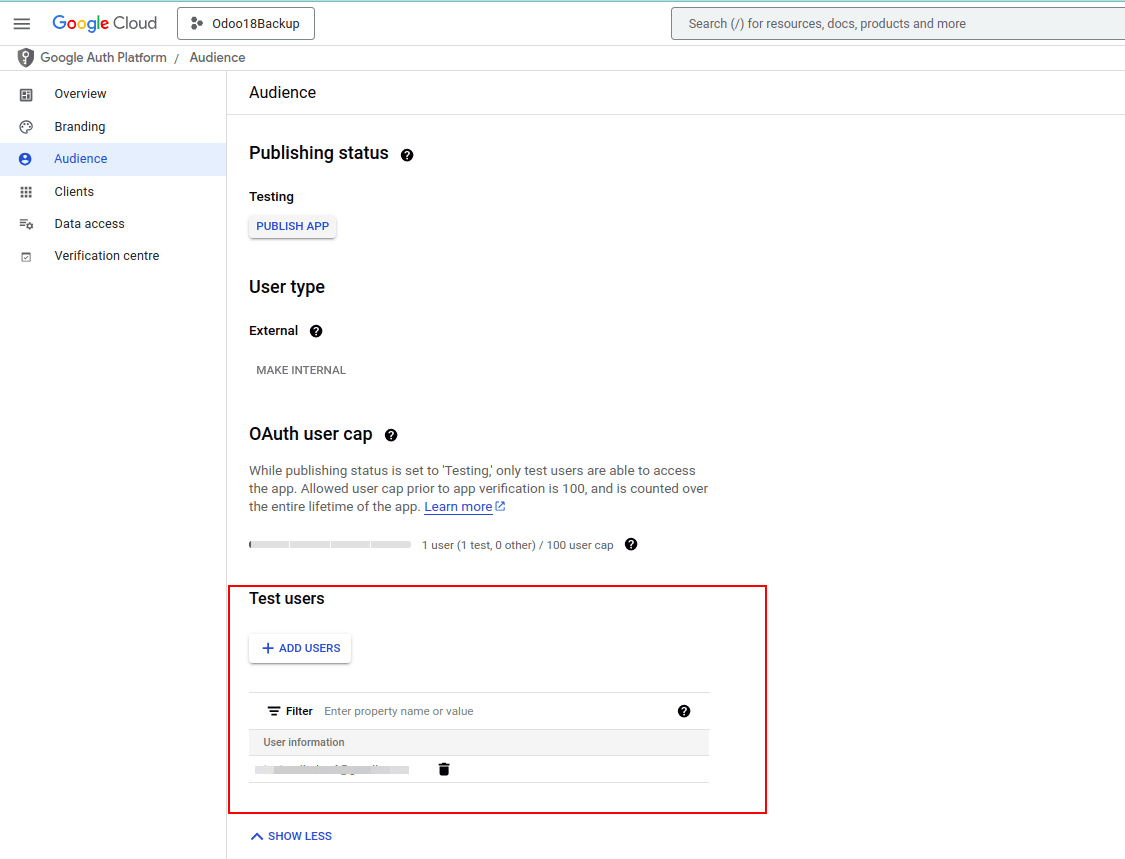
- After this, access the OAuth consent screen. Under "Audience," add the current login email as a Test User to grant the application access, or alternatively, complete the official app publishing process.
Step 4: Configure Odoo Backup Settings
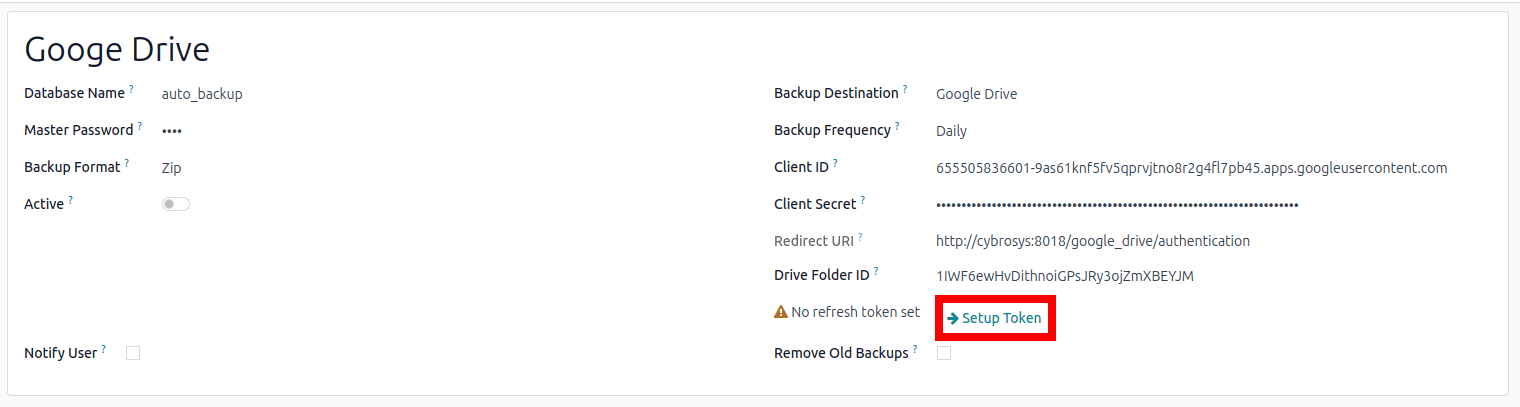
- Enter the obtained Client ID and Client Secret into their respective fields within the Odoo Backup Configuration interface.
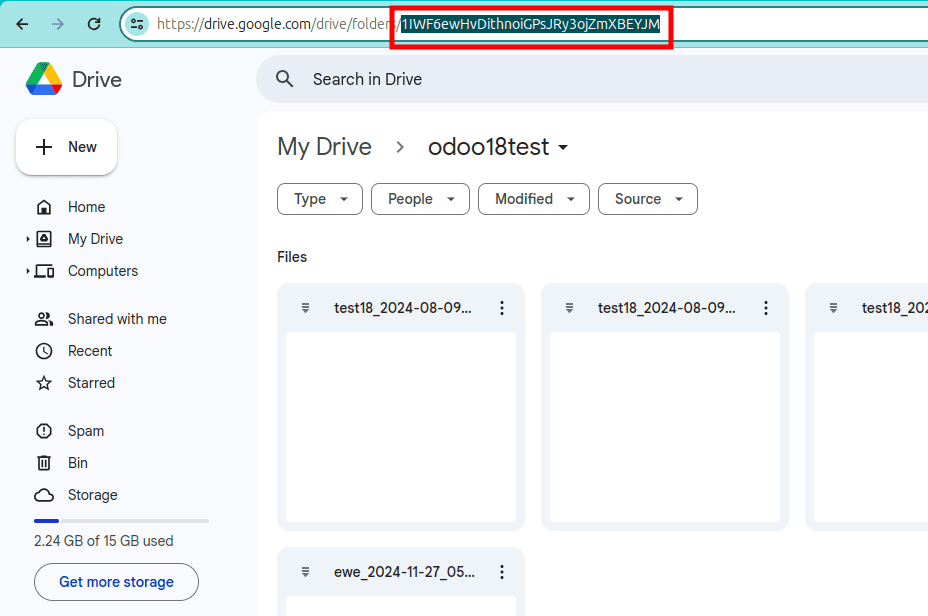
- Input the specific Drive folder ID, which can be extracted from the folder’s URL in Google Drive.
- Once the configuration is complete, click on "Setup Token". This action will redirect you to a Google authorization page.
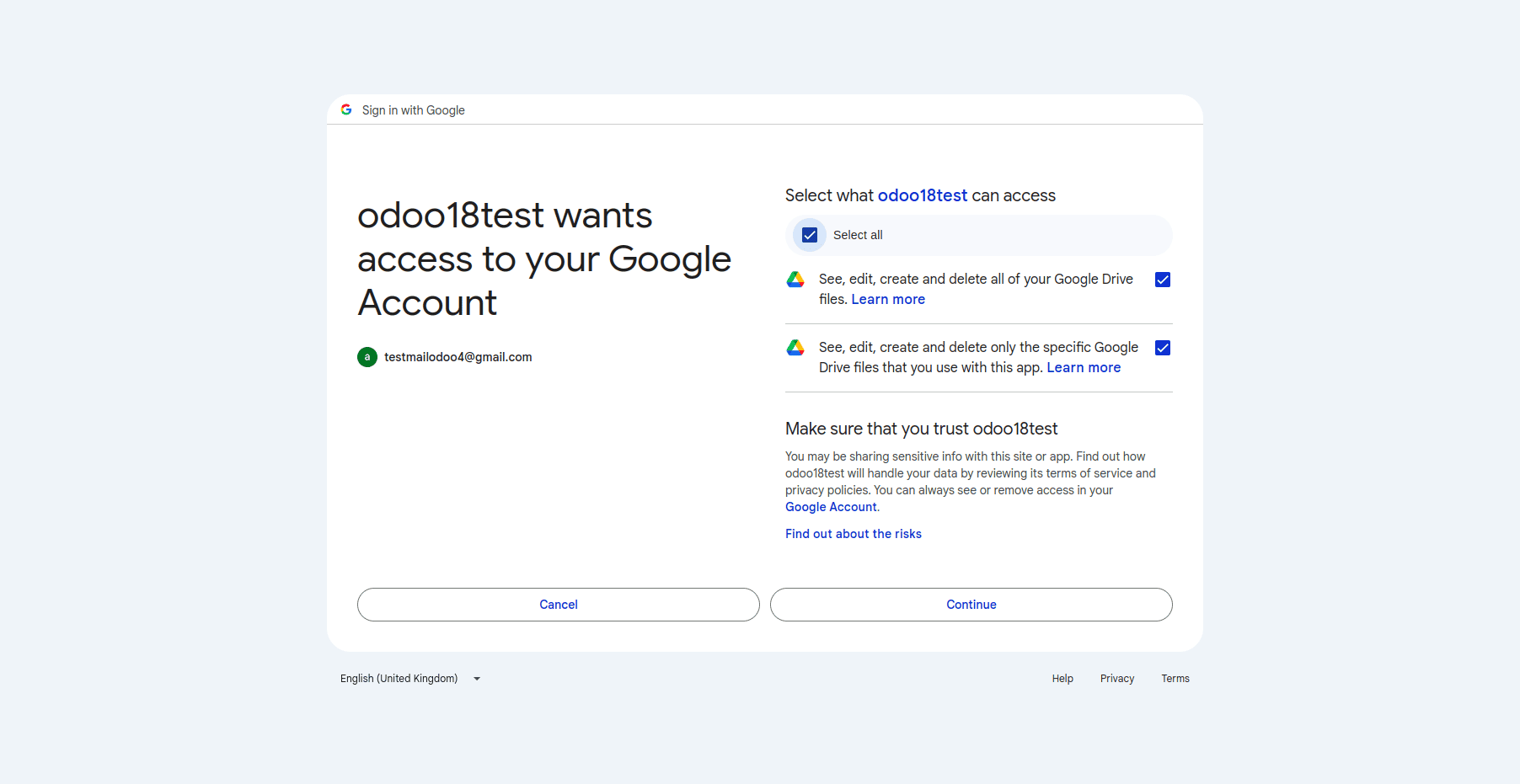
- Grant the necessary access permissions and continue the process.
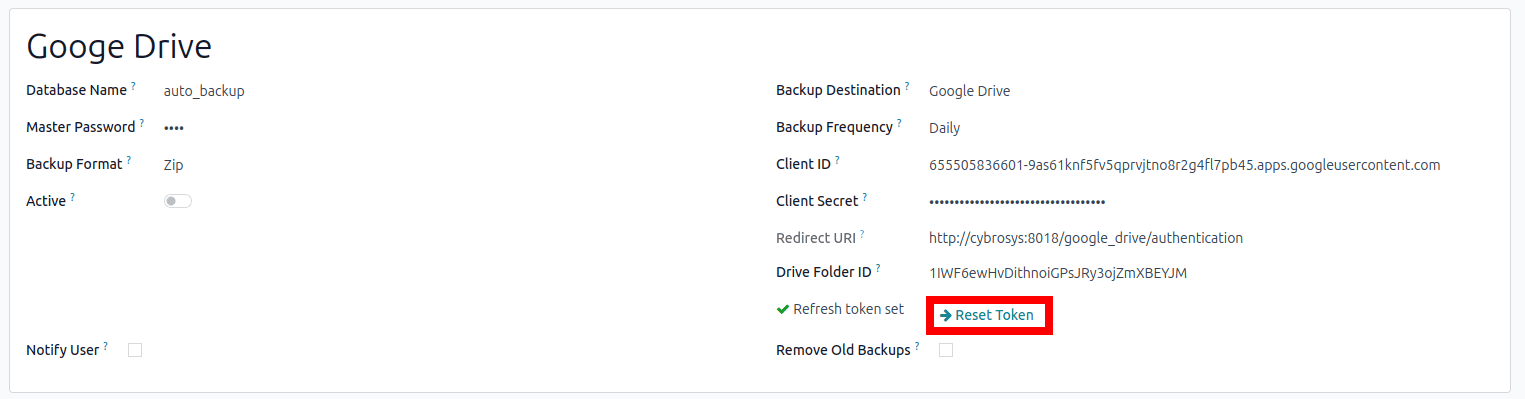
- Upon successful token generation, your Odoo backups will commence uploading to Google Drive as per your defined schedule.
- A "Reset Token" button will become available, allowing you to refresh the authentication token if required at any point.
Dropbox Integration
Utilizing Dropbox for Odoo database backups provides another reliable cloud storage option. The process involves creating a new application within the Dropbox Developers Console to obtain necessary authentication keys.
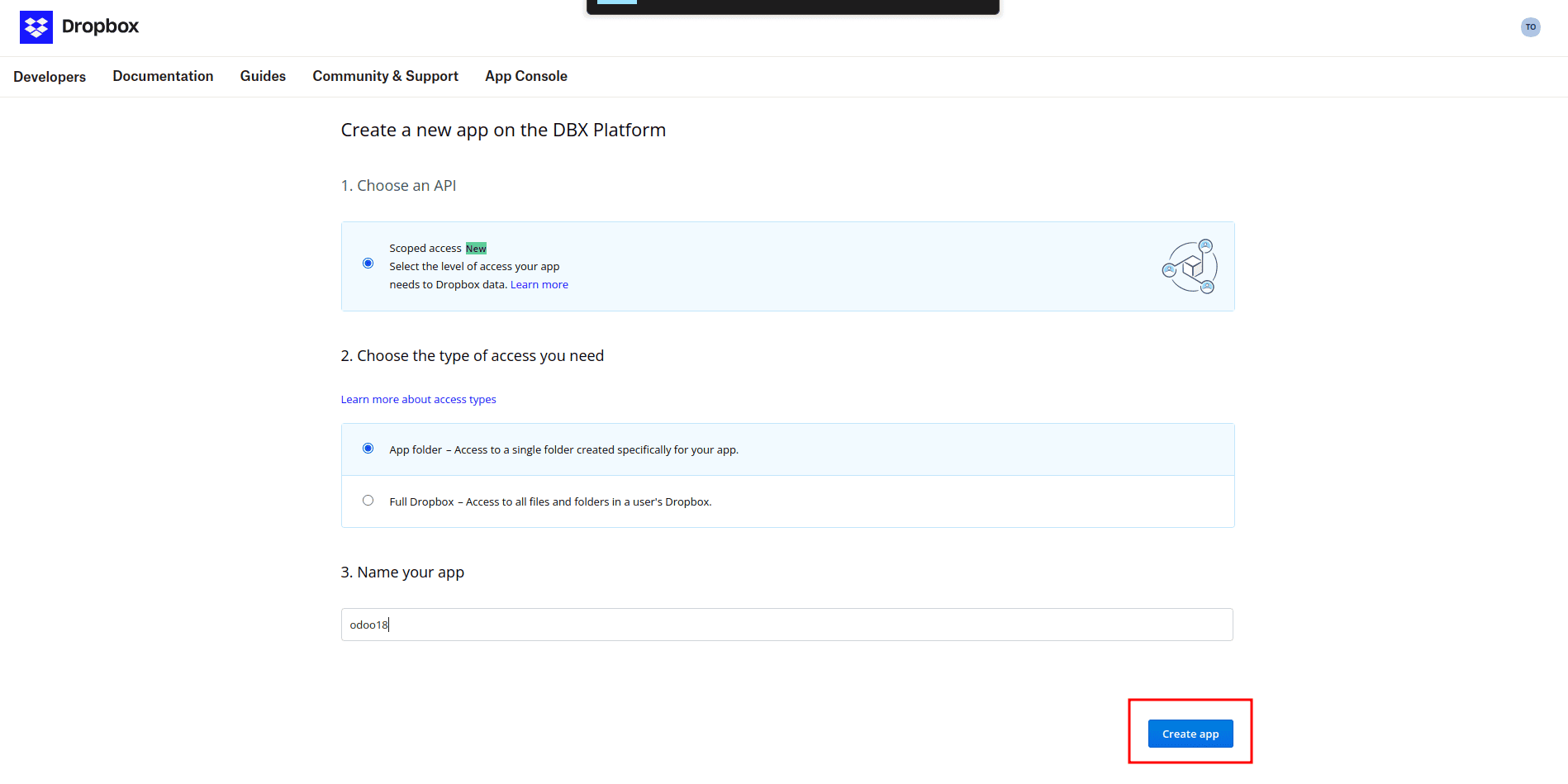
Step 1: Create a New App
Navigate to the Dropbox Developers App Console and initiate the creation of a new application tailored for this integration.
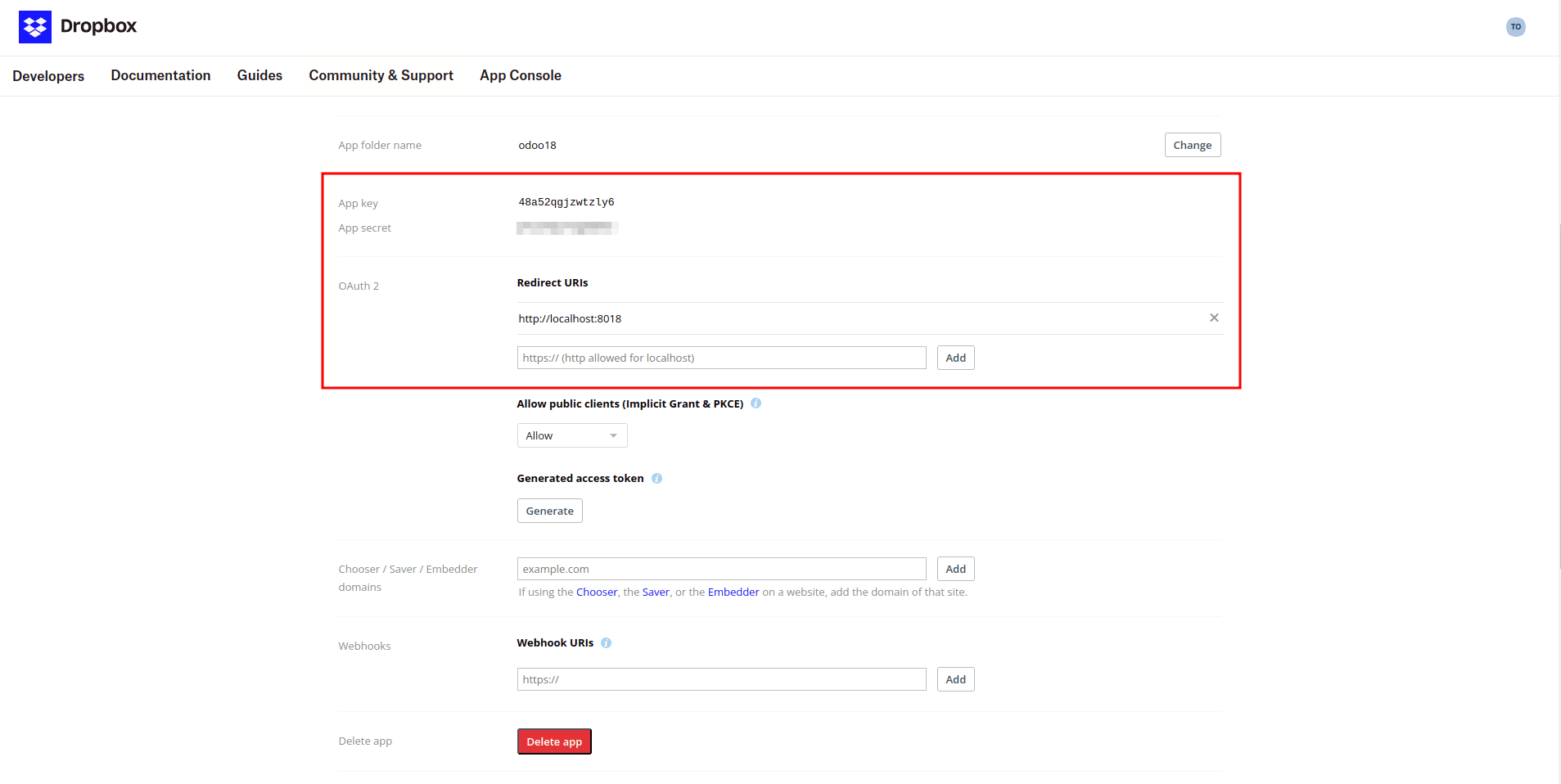
Step 2: Retrieve App Key and Secret
Once your application has been successfully created, you will be provided with a unique App Key and App Secret. These credentials are vital for authenticating your Odoo instance with Dropbox.
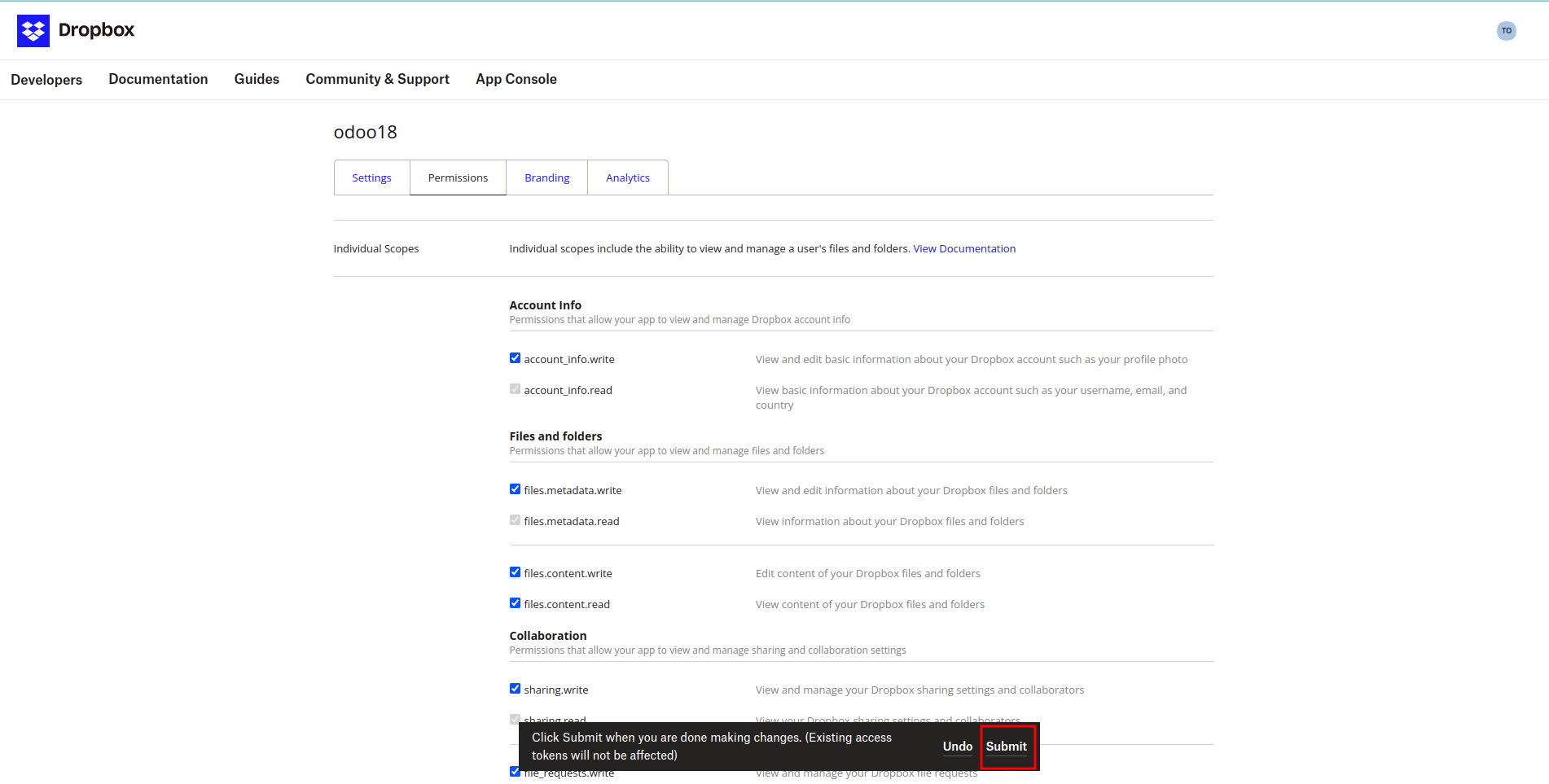
Step 3: Set Permissions
Carefully select the appropriate permissions for your application to ensure it has the necessary access rights for backup operations, then click submit to save the changes.
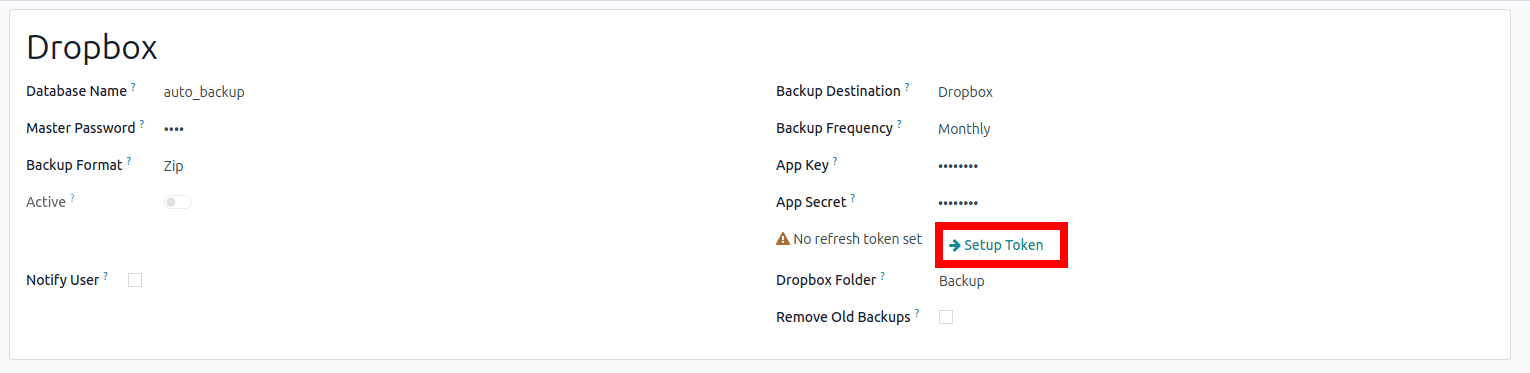
Step 4: Configure Backup in Odoo
- Within Odoo, access the Backup Configuration settings and choose "Dropbox" as your backup destination.
- Enter the retrieved App Key, App Secret, and the exact Dropbox Folder Name where you wish to store your backups.
- Click on "Setup Token" to initiate the generation of the authentication token.
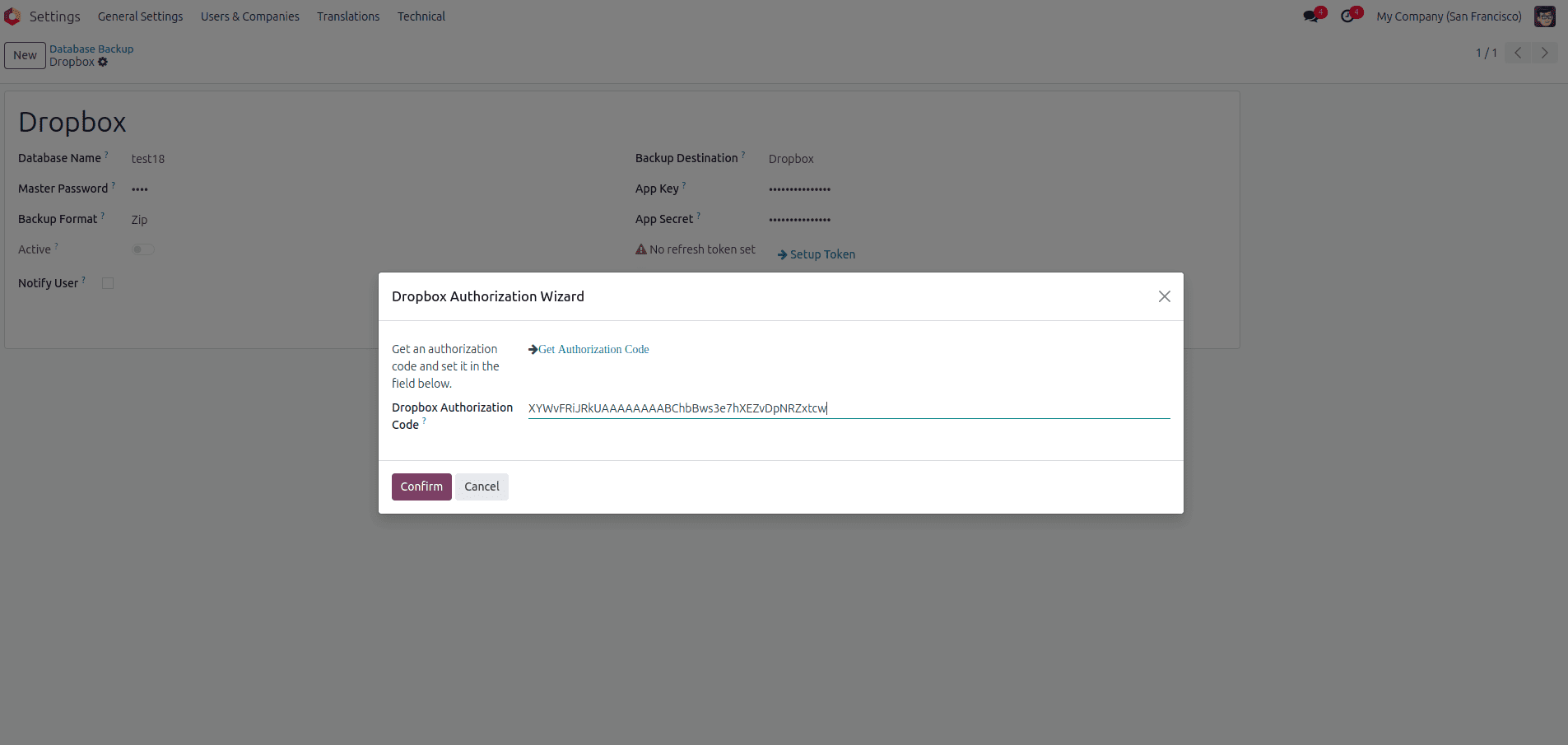
Step 5: Get the Authorization Code
Click on "Get Authorization Code" and then paste the newly generated code into the "Dropbox Authorization Code" field within the Odoo wizard.
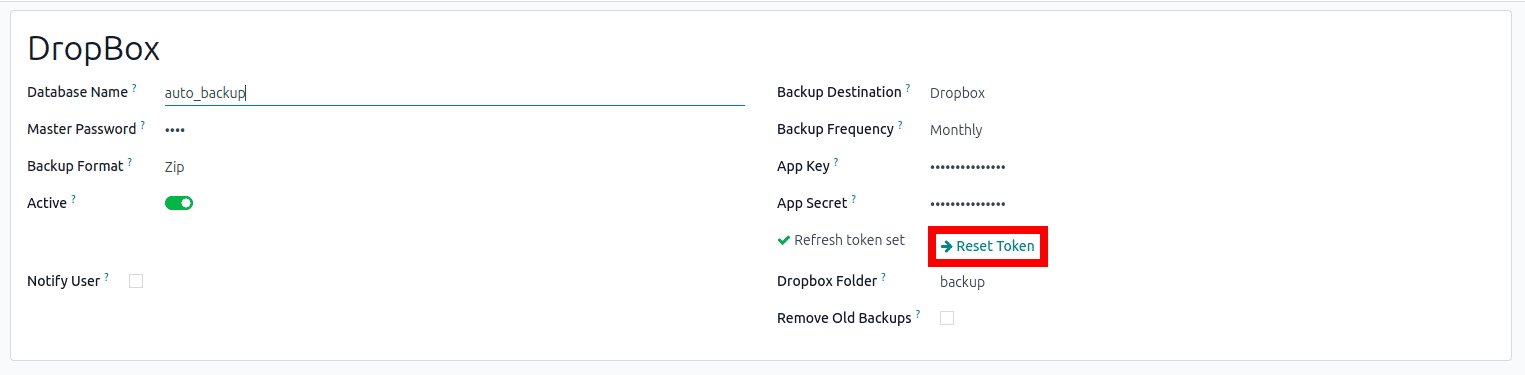
Step 6: Reset Refresh Token (If Required)
Should it become necessary, you can click "Reset Token" to refresh the authentication token, ensuring continuous and secure access to your Dropbox storage.
OneDrive Integration
To configure your Odoo backup solution to store files on Microsoft OneDrive, you'll need to register a new application within the Microsoft Azure Portal and define appropriate permissions.
Step 1: Register a New App in Microsoft Azure
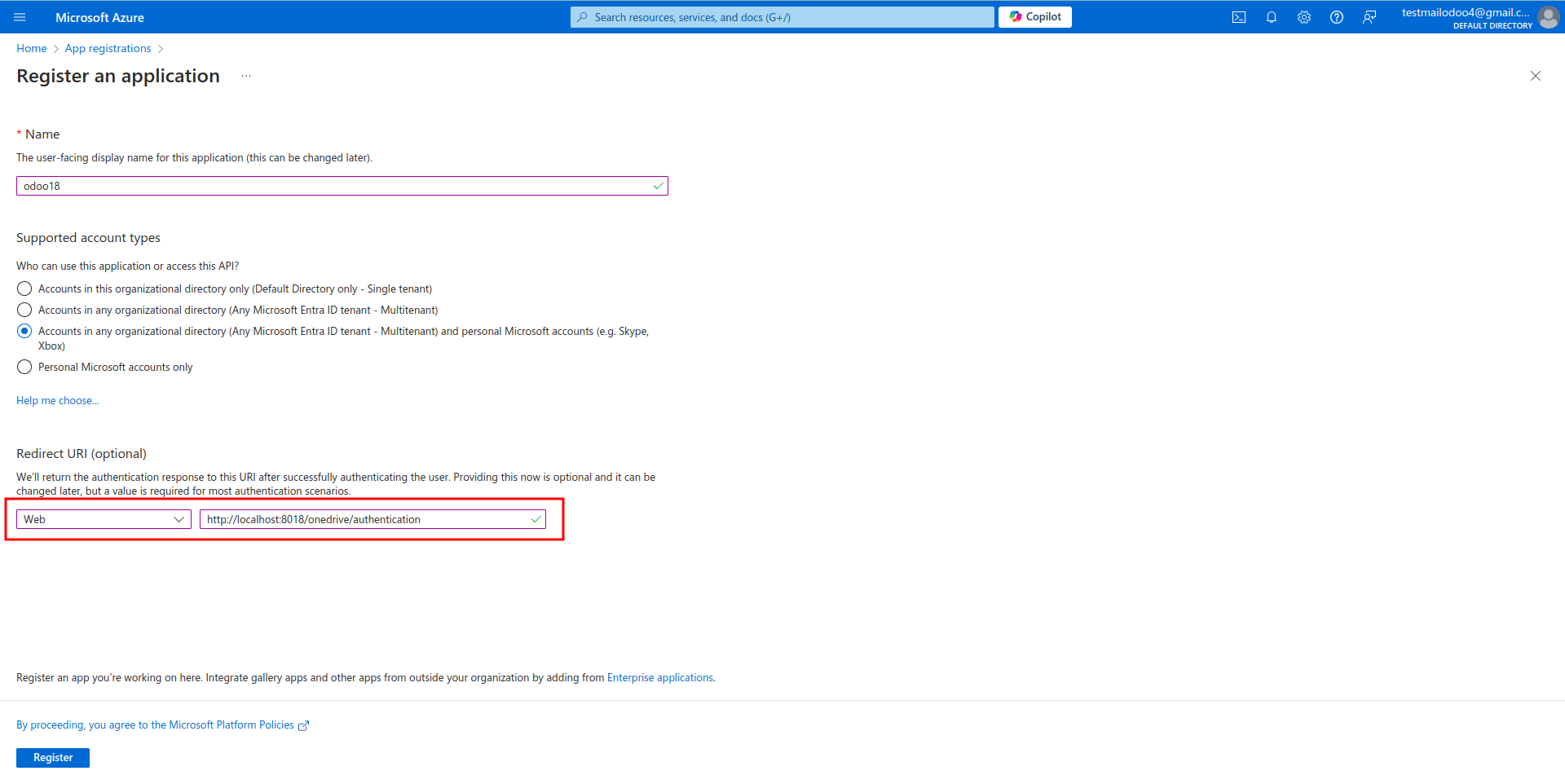
- Navigate to the Microsoft Azure Portal and proceed to register a new application.
- For the "Redirect URI" restrictions, input your Odoo database URI followed by
/onedrive/authentication. For example:https://your-odoo-instance.com/onedrive/authentication.
Step 2: Obtain Credentials
- Copy the Client ID and then generate Client Credentials from within the registered application's settings.
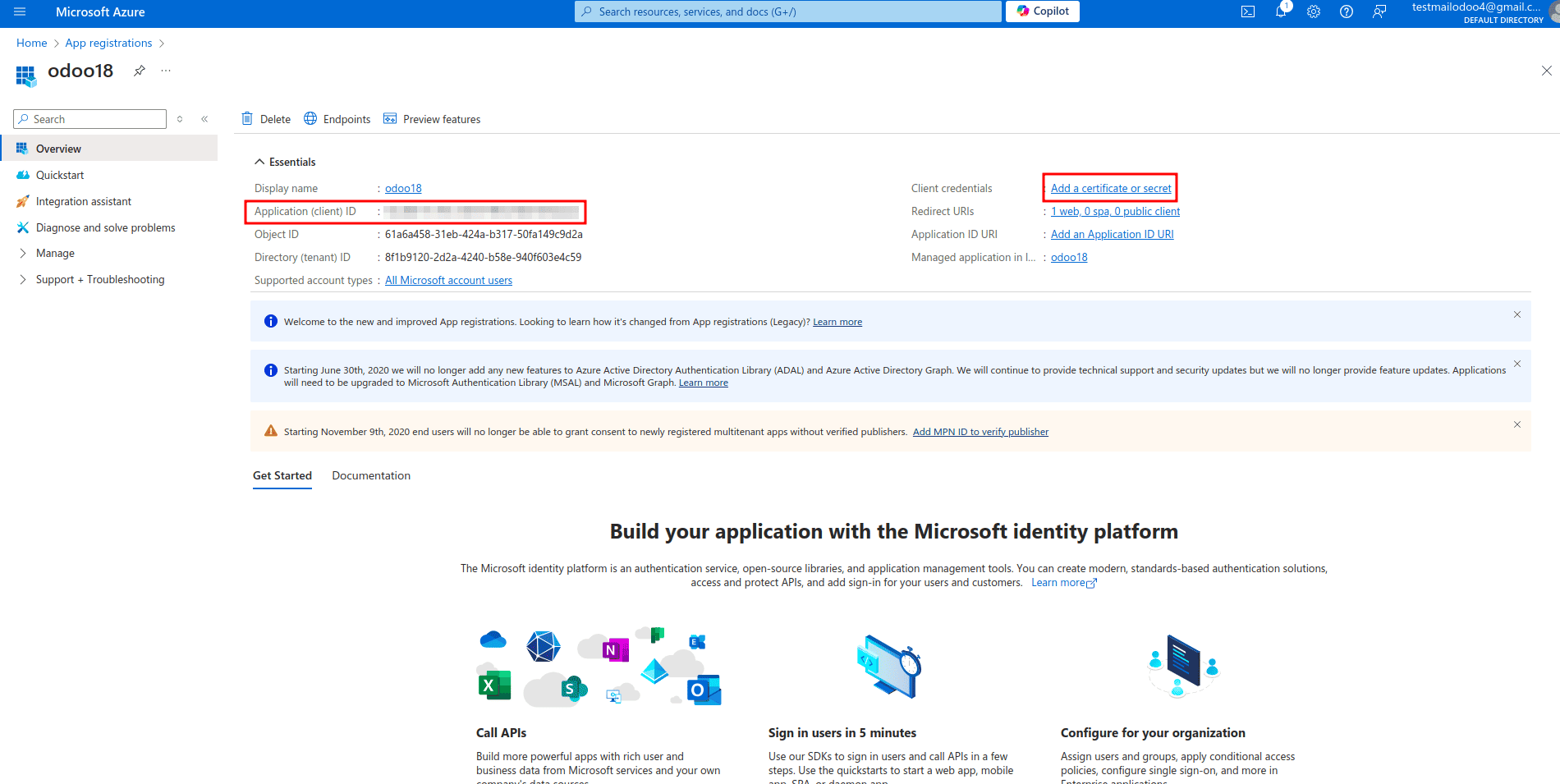
- Ensure you securely obtain the client secret, which is crucial for authentication.
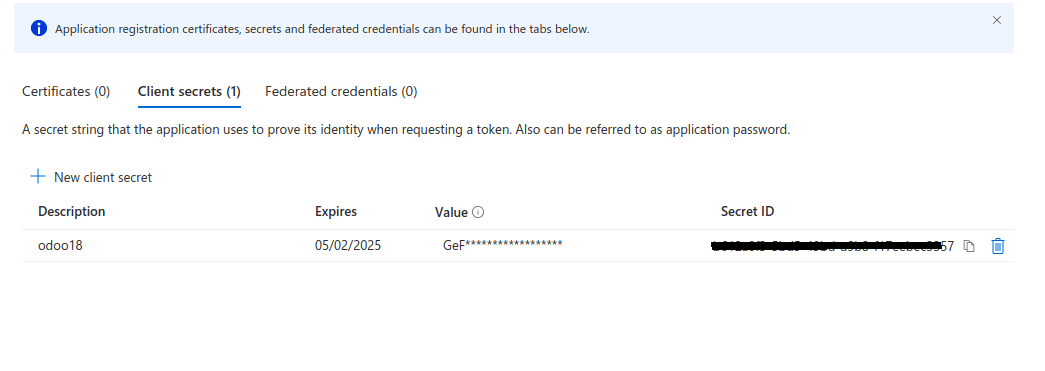
Step 3: Set Permissions
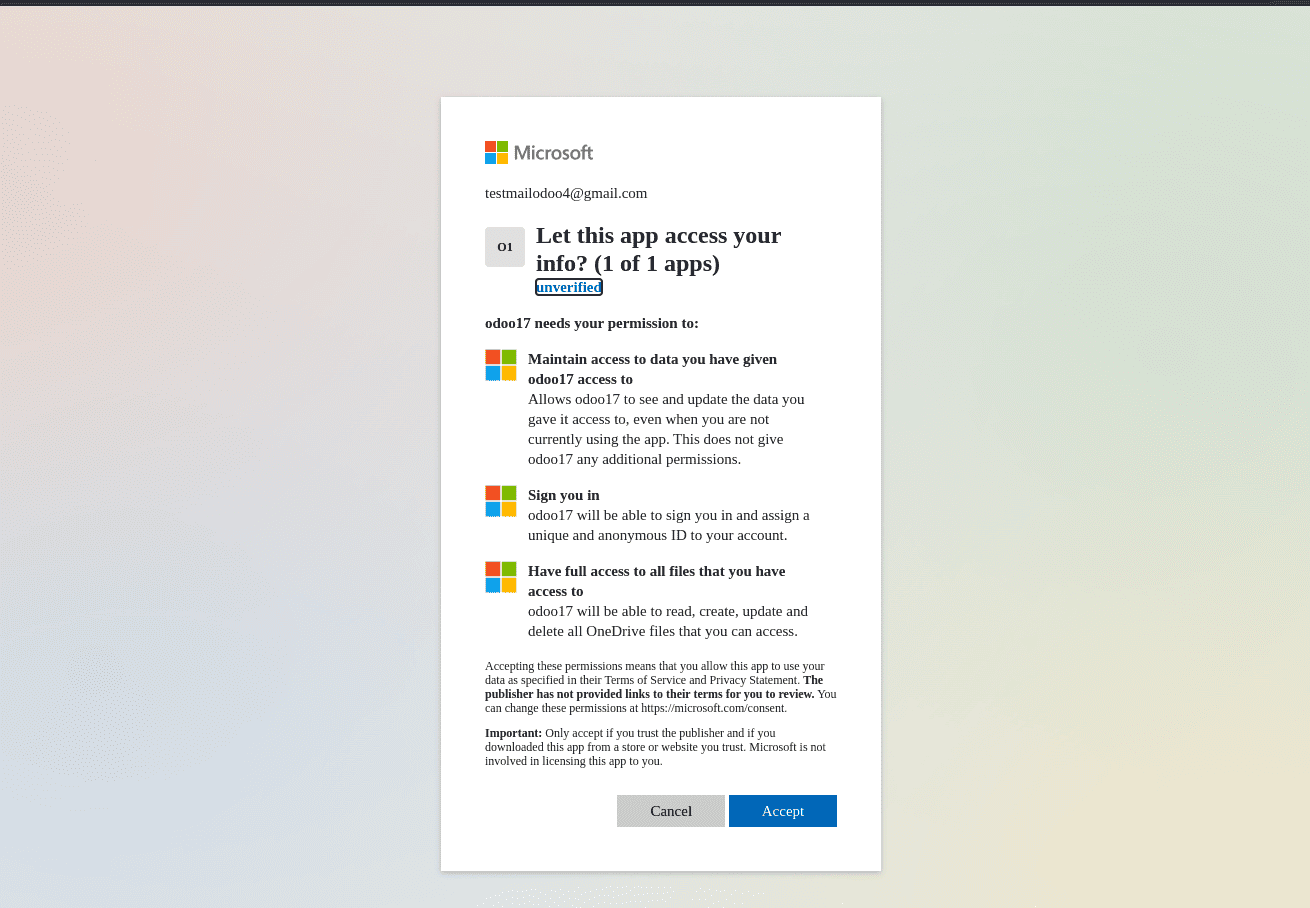
- Within the "Expose an API" section, add the necessary Scopes for your application to access OneDrive. Essential scopes include:
- Offline_access
- openid
- Files.ReadWrite.All
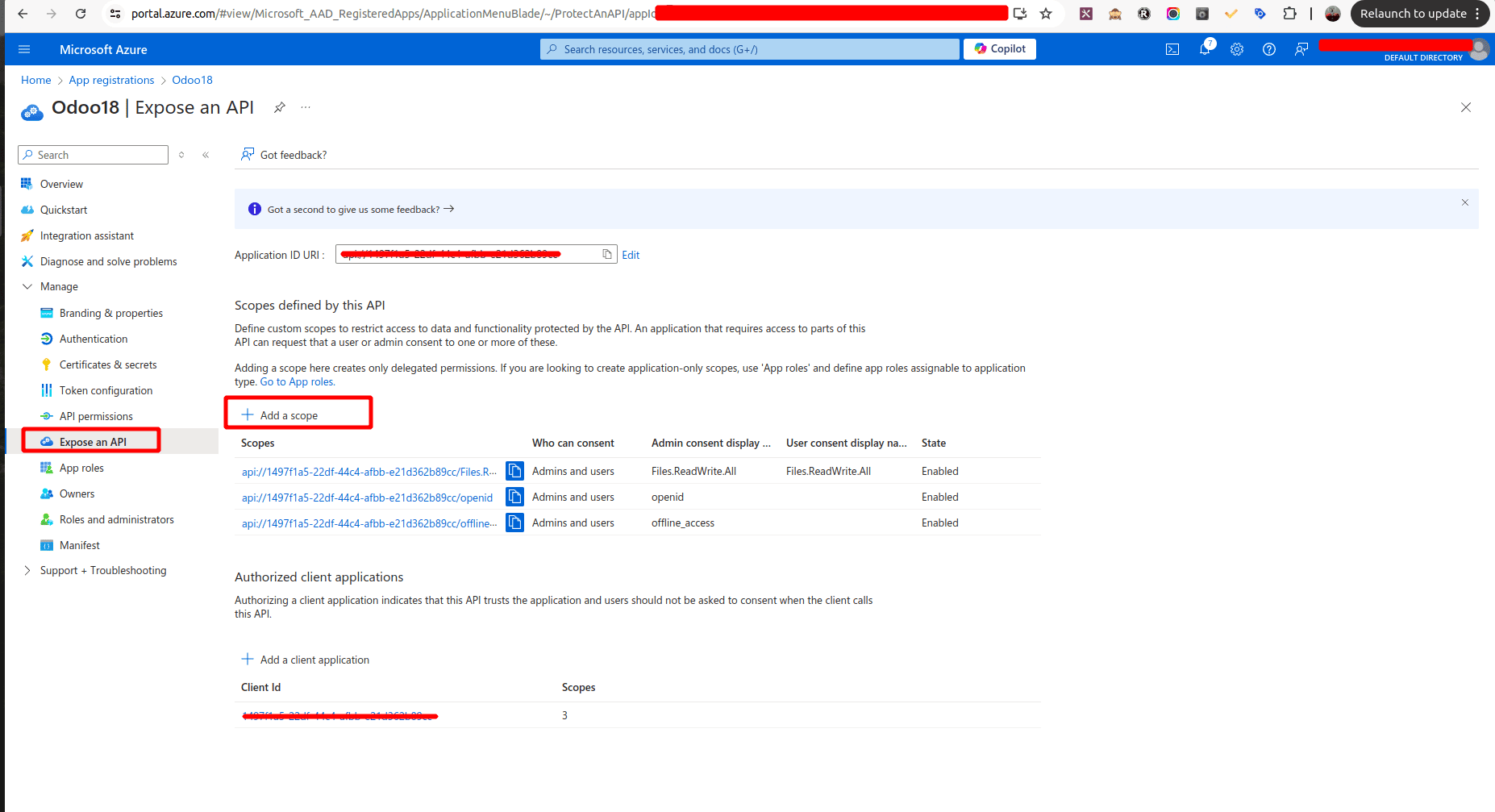
Step 4: Retrieve OneDrive Folder ID
- Obtain the OneDrive Folder ID directly from the URL of the specific folder in OneDrive where you wish to store your backup files.
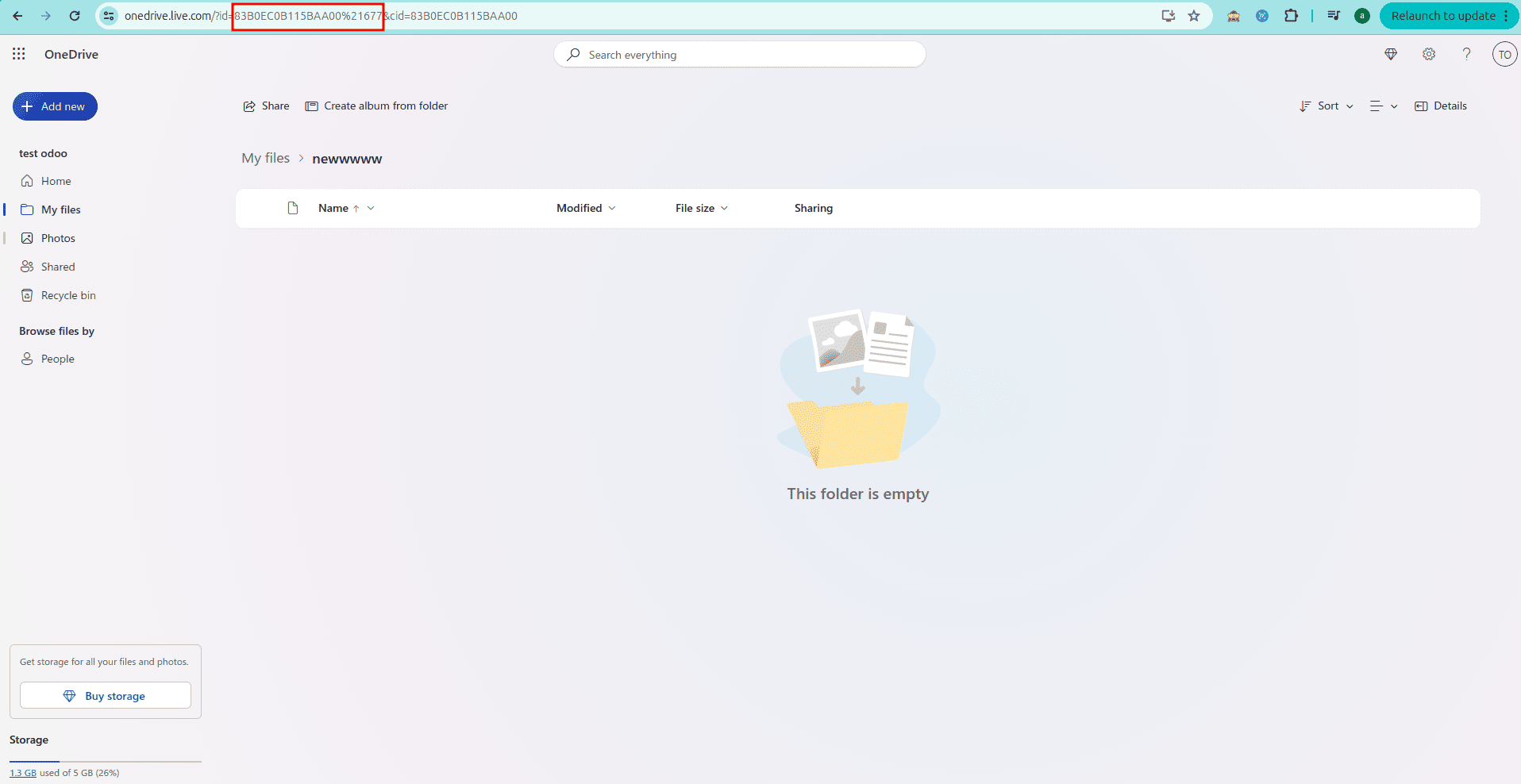
Step 5: Configure Backup in Odoo
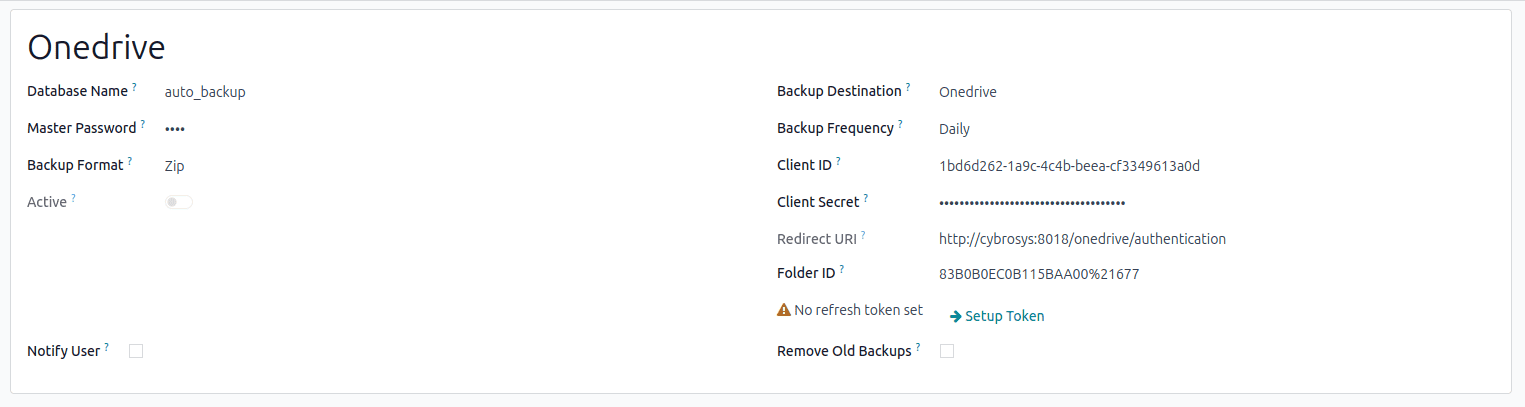
- In the Odoo Backup Configuration, select "OneDrive" as your desired backup destination.
- Enter the App Key (Client ID), App Secret (Client Credentials), and the OneDrive Folder ID into their respective fields.
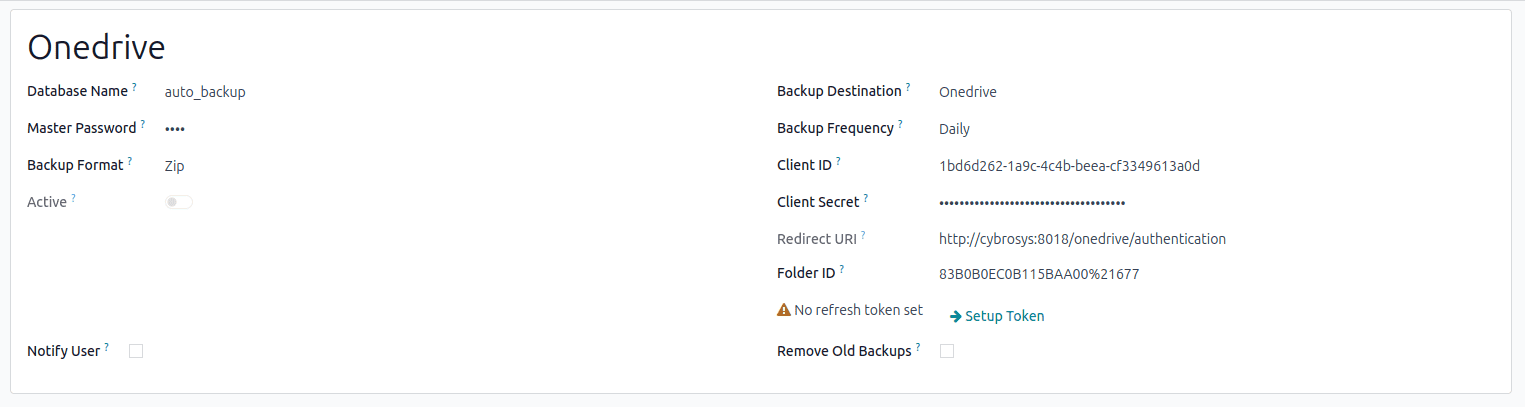
Step 6: Authenticate & Generate Token
- Click on "Setup Token" to initiate the authentication process.
- You will be redirected to an authorization page where you must grant the necessary permissions for Odoo to access your OneDrive.
Nextcloud Integration
Nextcloud offers a self-hosted cloud storage solution, giving you greater control over your data. Configuring Odoo backups to Nextcloud involves setting up your Nextcloud account and providing the necessary connection details.
Step 1: Create a Nextcloud Account
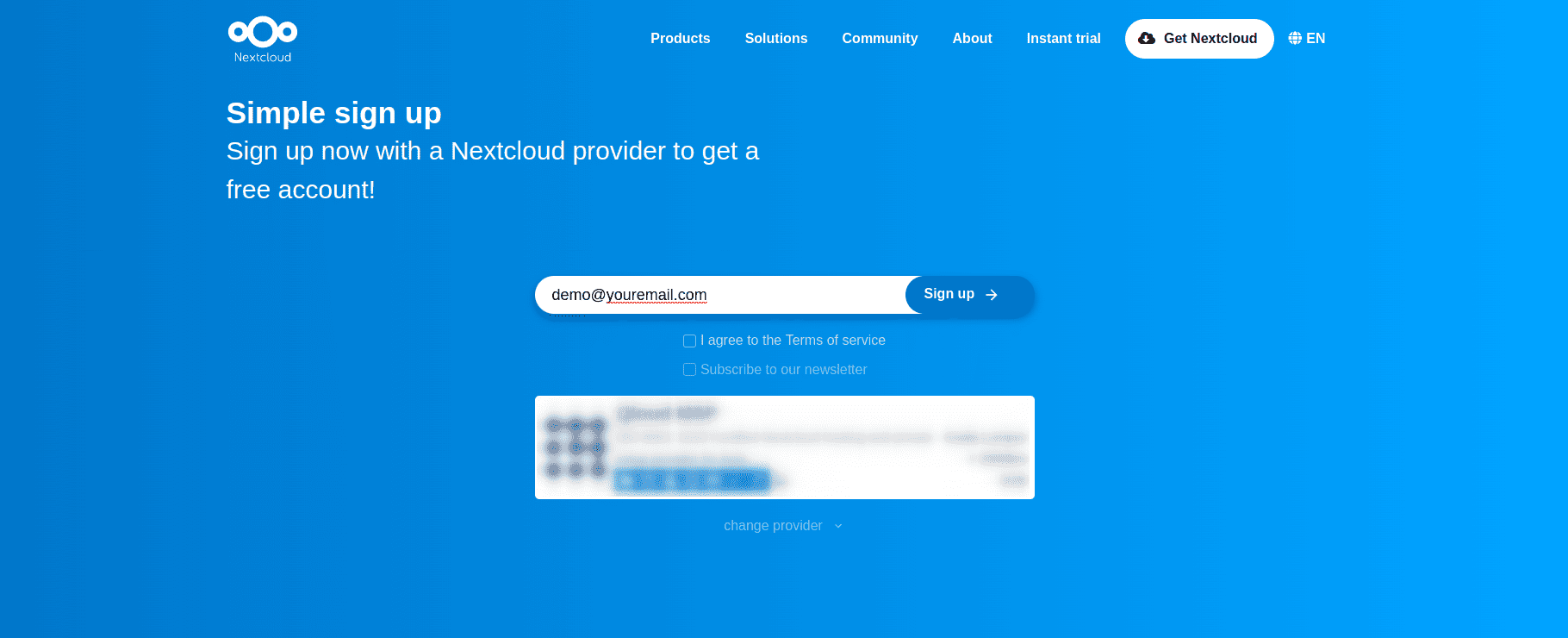
- Visit the Nextcloud Sign-Up page to create a new account.
- Enter your email address and click "Sign Up" to proceed.
Step 2: Log in to Nextcloud
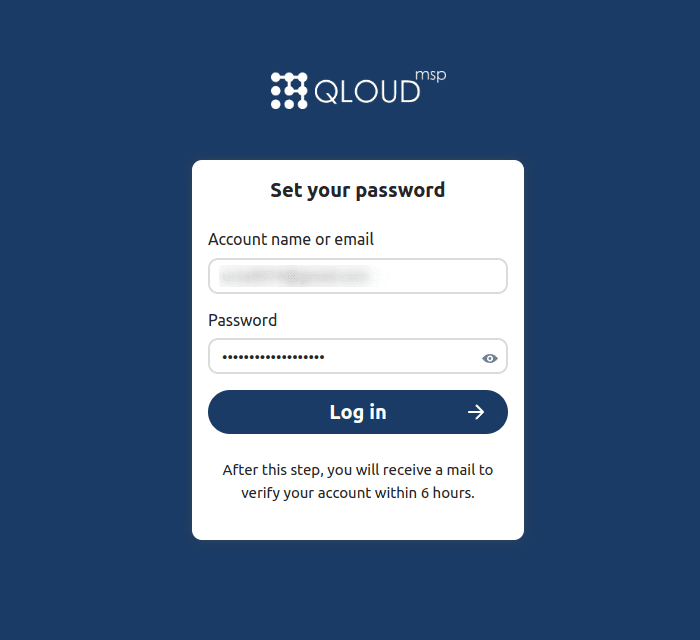
- After successfully signing up, you will be directed to a login page.
- Enter your registered email and password to access your Nextcloud account.
Step 3: Retrieve Your Nextcloud Domain
- Navigate to the "Settings" section within your Nextcloud account.
- Click on "Mobile & Desktop" to find the "Server Address". Copy this link and paste it into Odoo as your Domain Name.
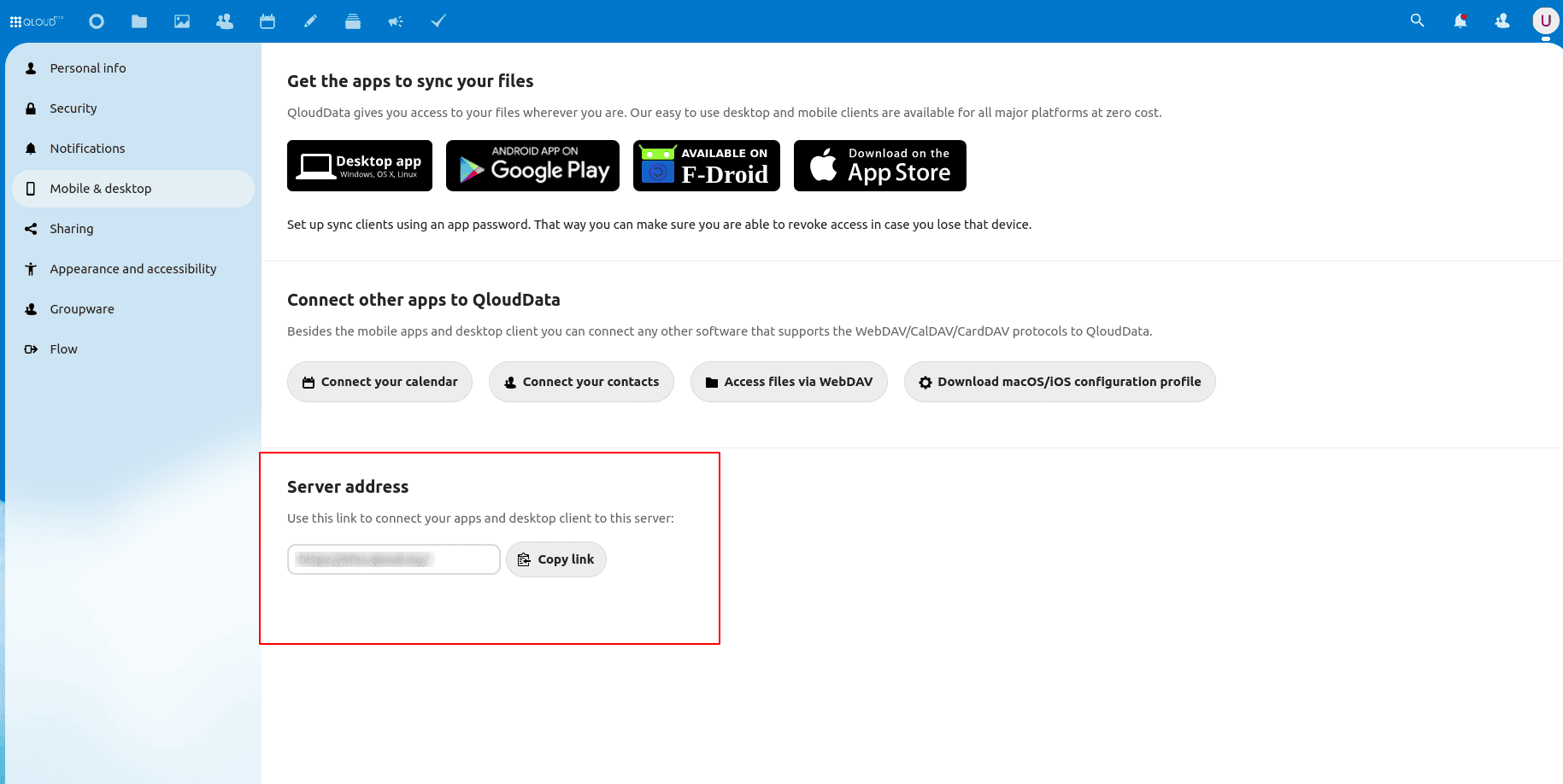
Step 4: Configure Backup in Odoo
- Select "Nextcloud" as your backup destination within the Odoo configuration.
- Enter the following essential details:
- Domain Name (retrieved in Step 3)
- Username for your Nextcloud account
- Password for your Nextcloud account
- Folder Name (the specific folder within Nextcloud where backups will be stored)
- Perform a "Test Connection" to ensure that the Odoo module can successfully communicate with your Nextcloud instance.
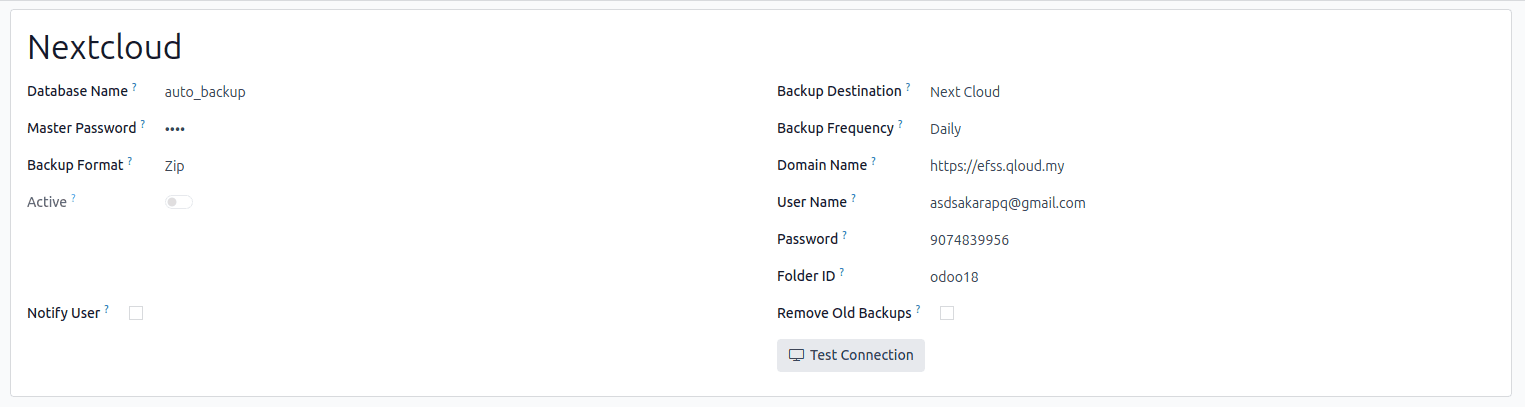
Once configured, backups will be automatically created within the specified Nextcloud folder according to the defined backup frequency.
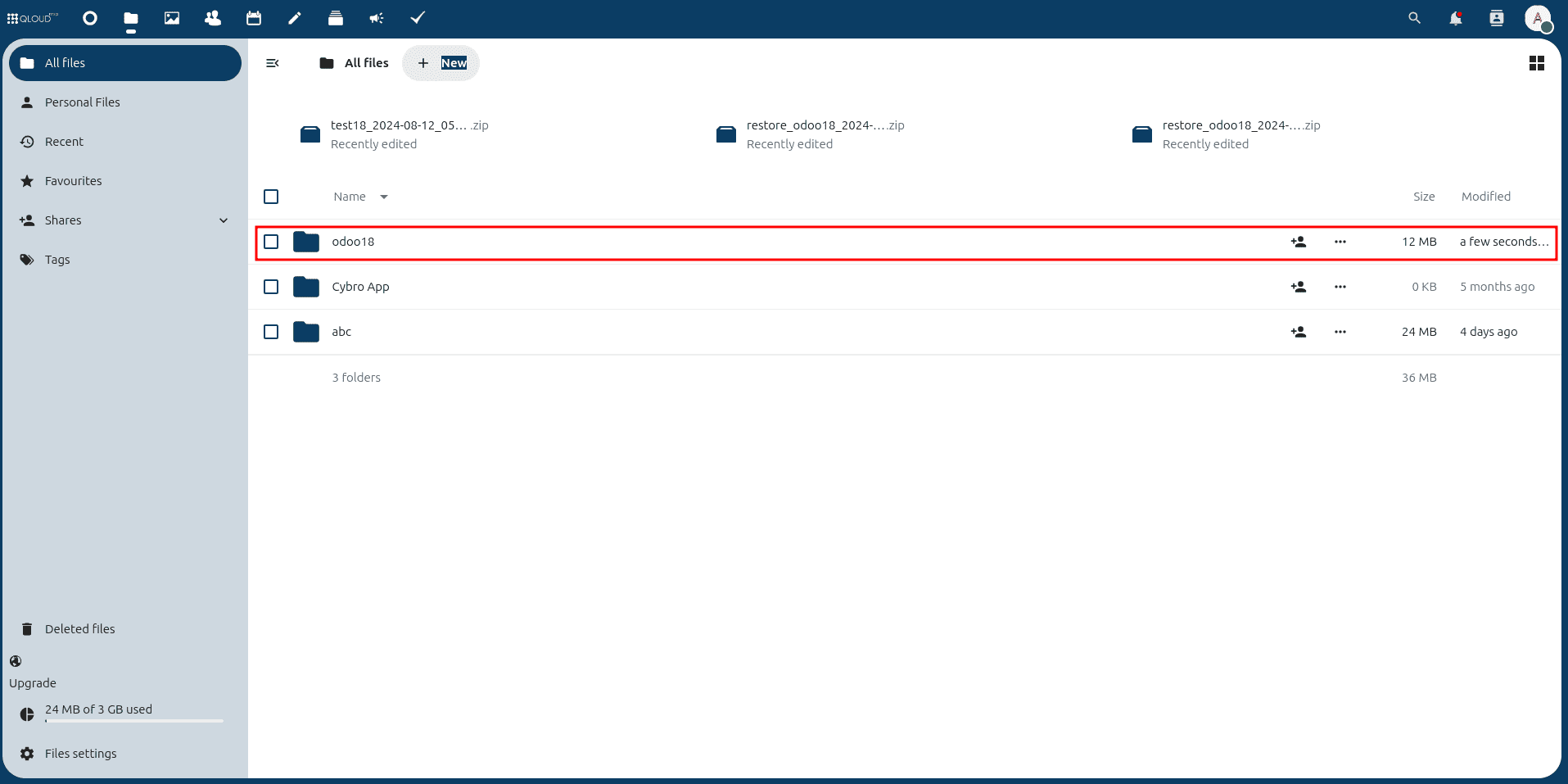
Amazon S3 Integration
Amazon S3 (Simple Storage Service) is a highly scalable and durable cloud storage service ideal for Odoo database backups. The setup requires creating an AWS account, generating access keys, and configuring an S3 bucket.
Step 1: Create an Amazon S3 Account
- Go to the Amazon S3 Sign-Up page to create your AWS account.
- Enter your email address and complete the guided sign-up process.
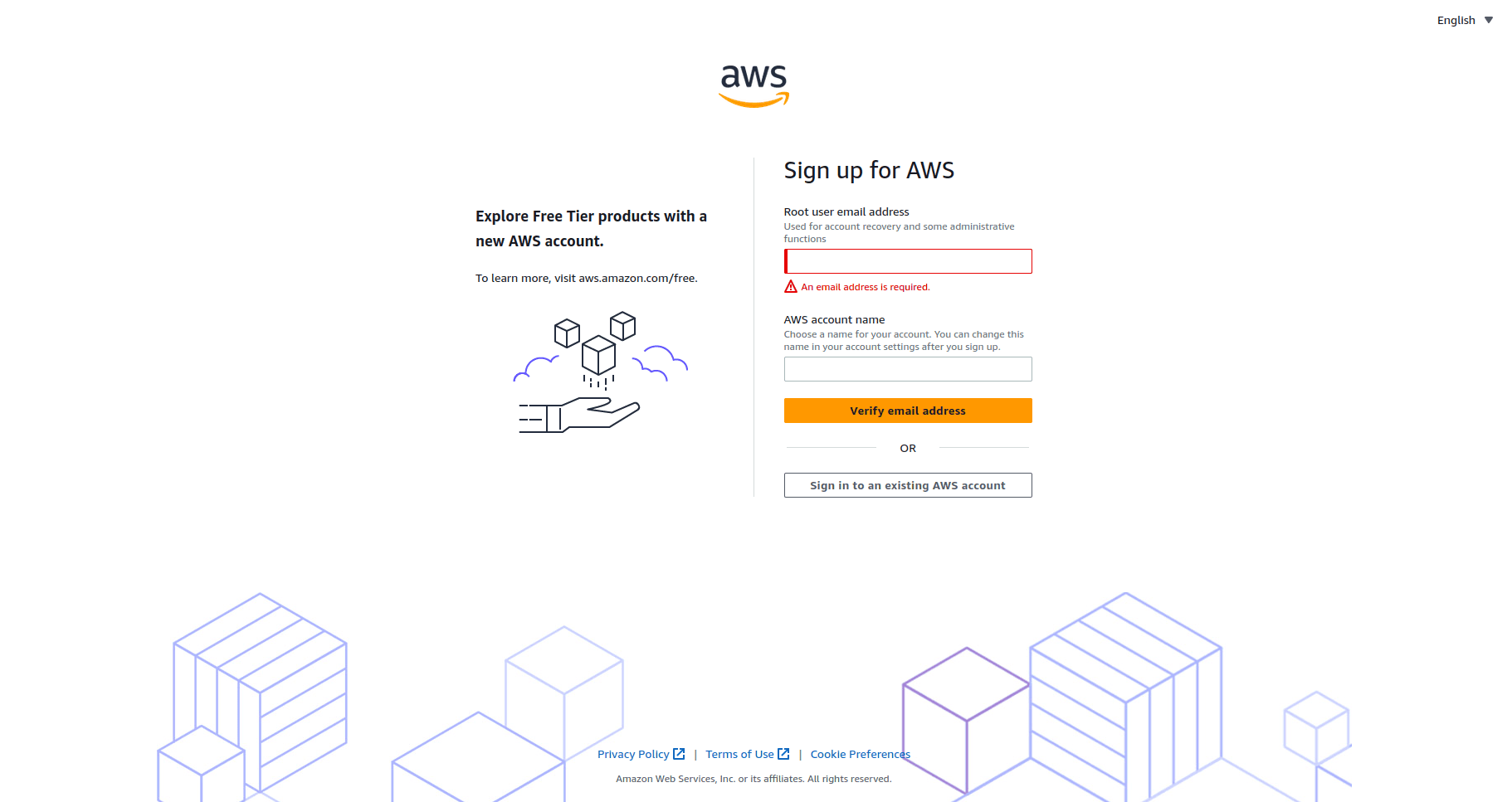
Step 2: Generate Access Keys
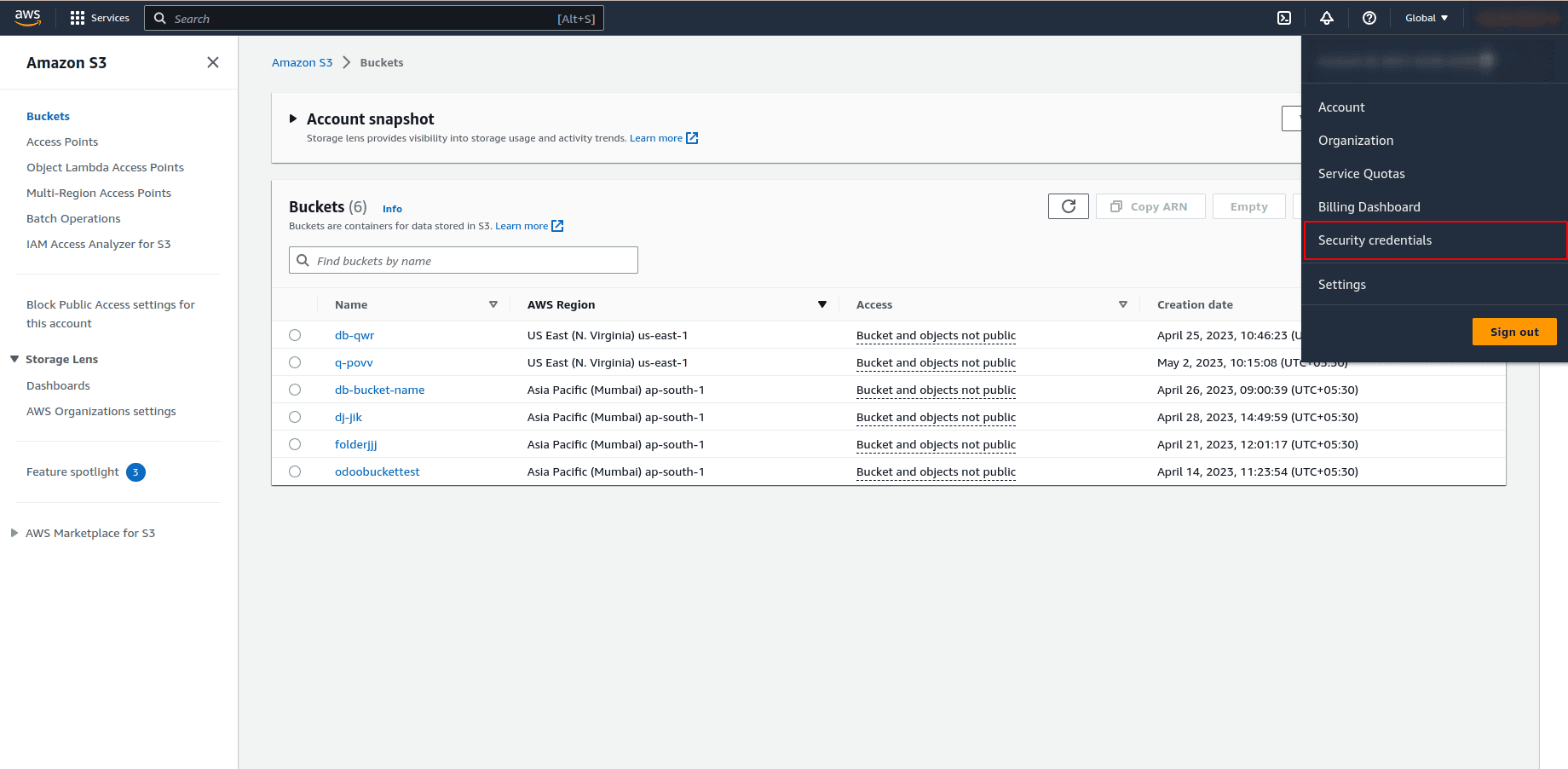
- After successfully creating your account, navigate to the "Account Security Credentials" section.
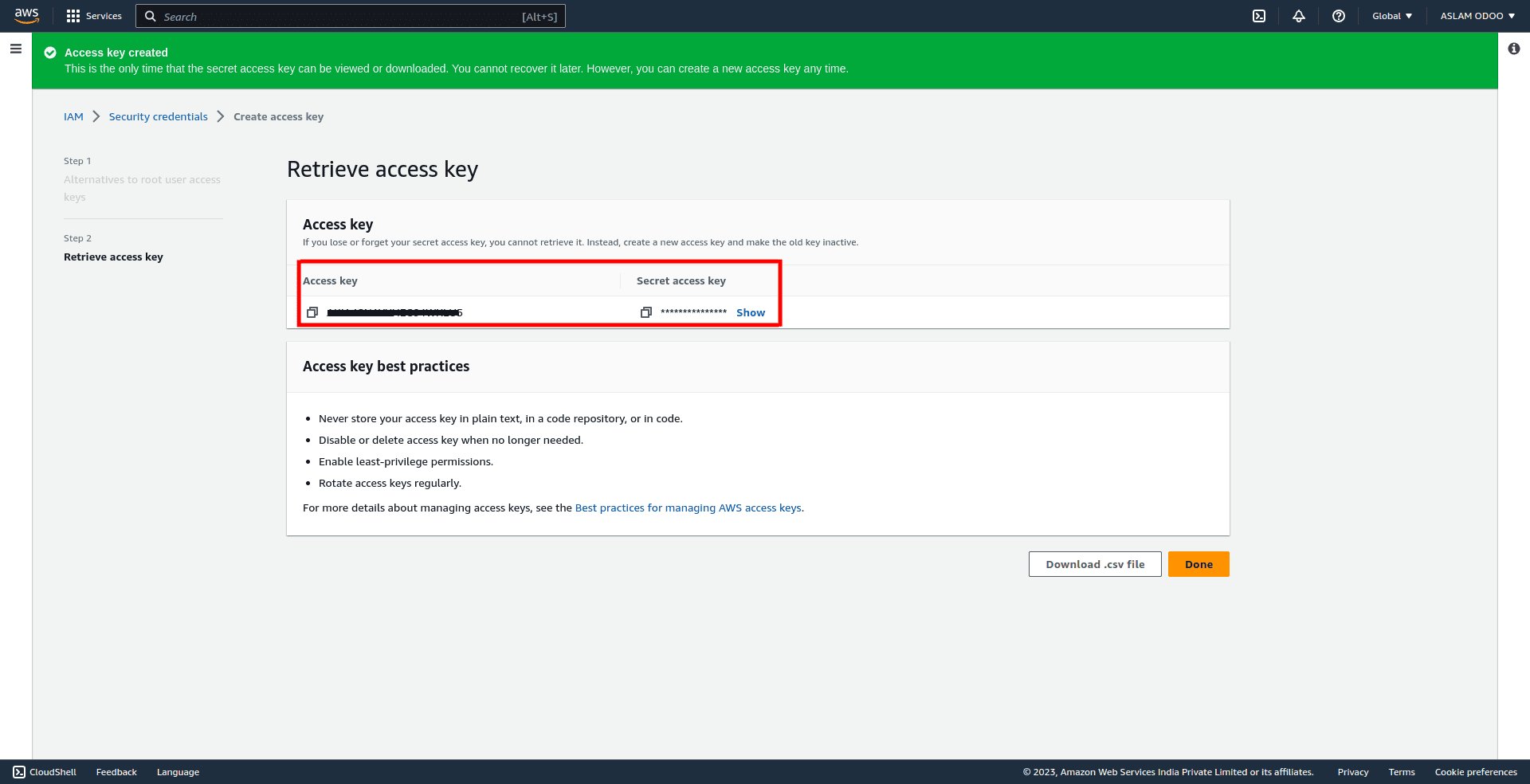
- Locate "Access Keys" and proceed to create a new access key.

- Copy both the Access Key and Secret Key, as these will be essential for configuring Odoo.
Step 3: Create an S3 Bucket
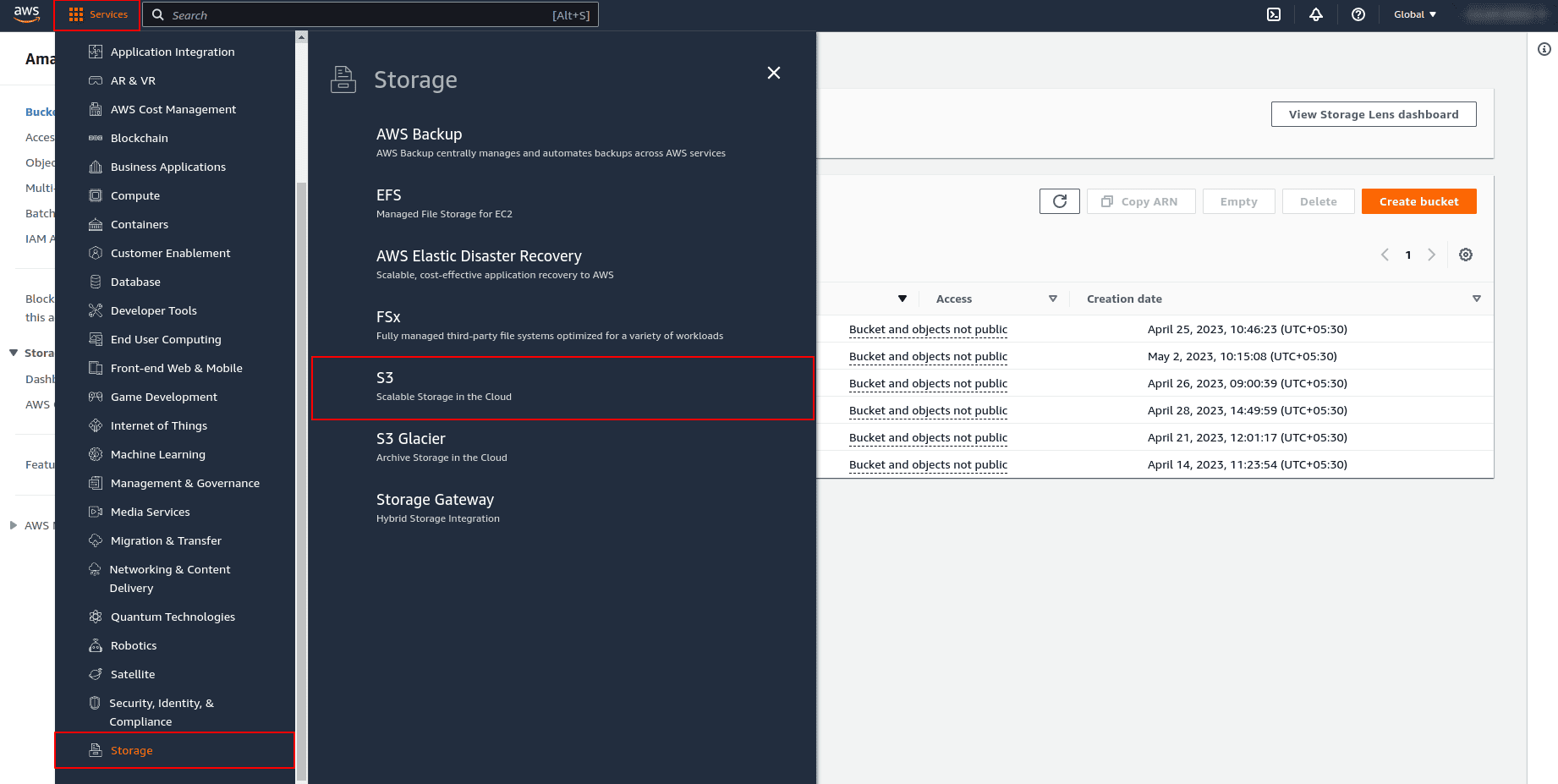
- Within the AWS Management Console, click on "Services" (usually found at the top-right).
- Navigate through "Storage > S3".
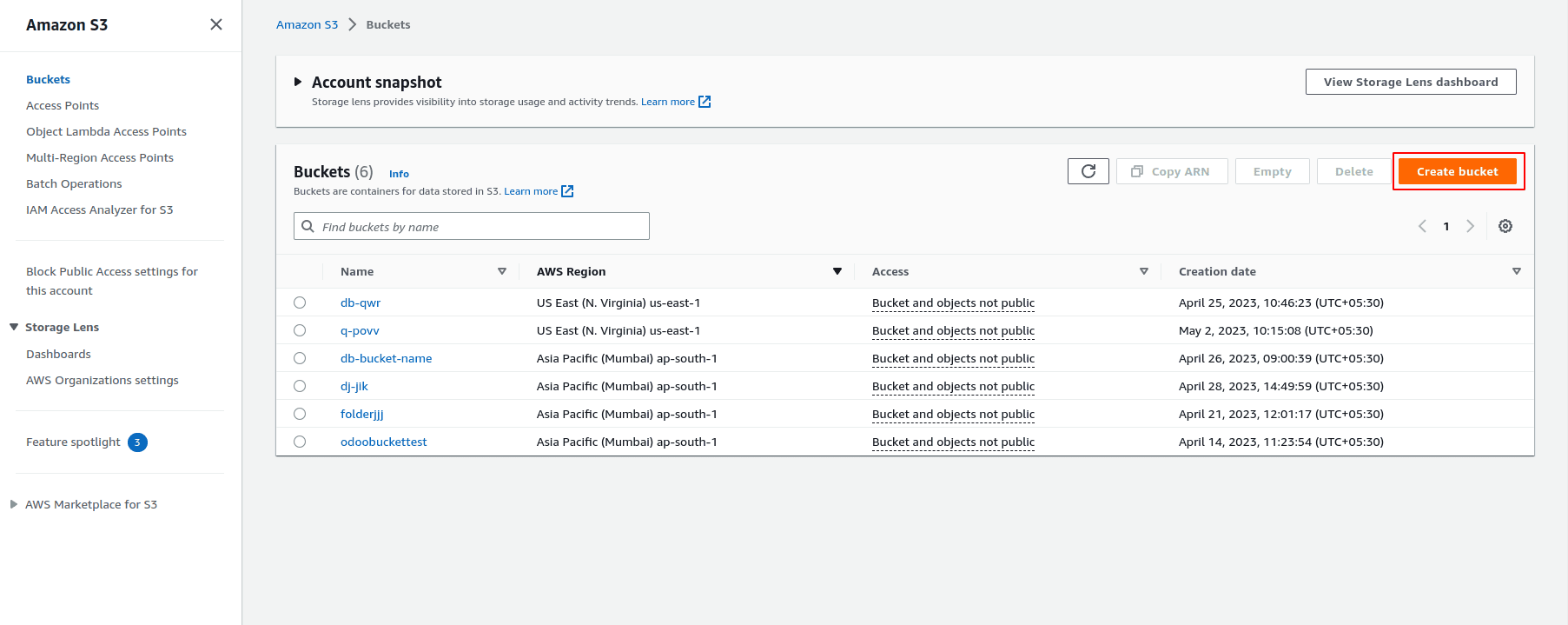
- Click on "Create Bucket" to begin setting up your storage container.
- Adhere to the naming rules for your bucket and select the appropriate AWS region where you wish your backups to be stored for optimal performance and compliance.
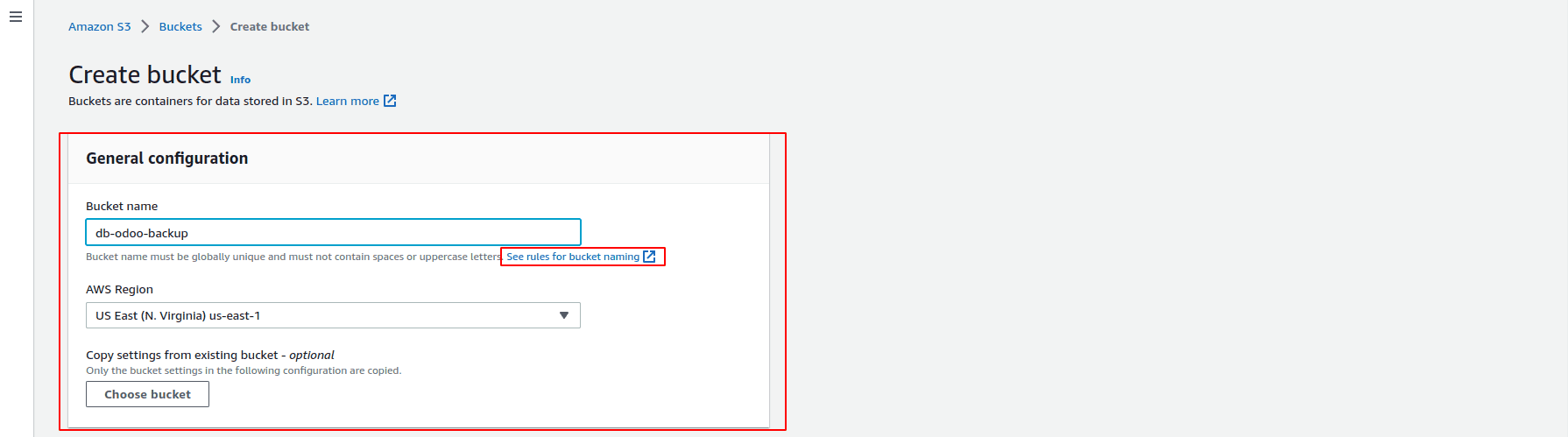
- Finally, click "Create Bucket" to finalize the setup. You will then observe the newly created bucket folder within your S3 console.
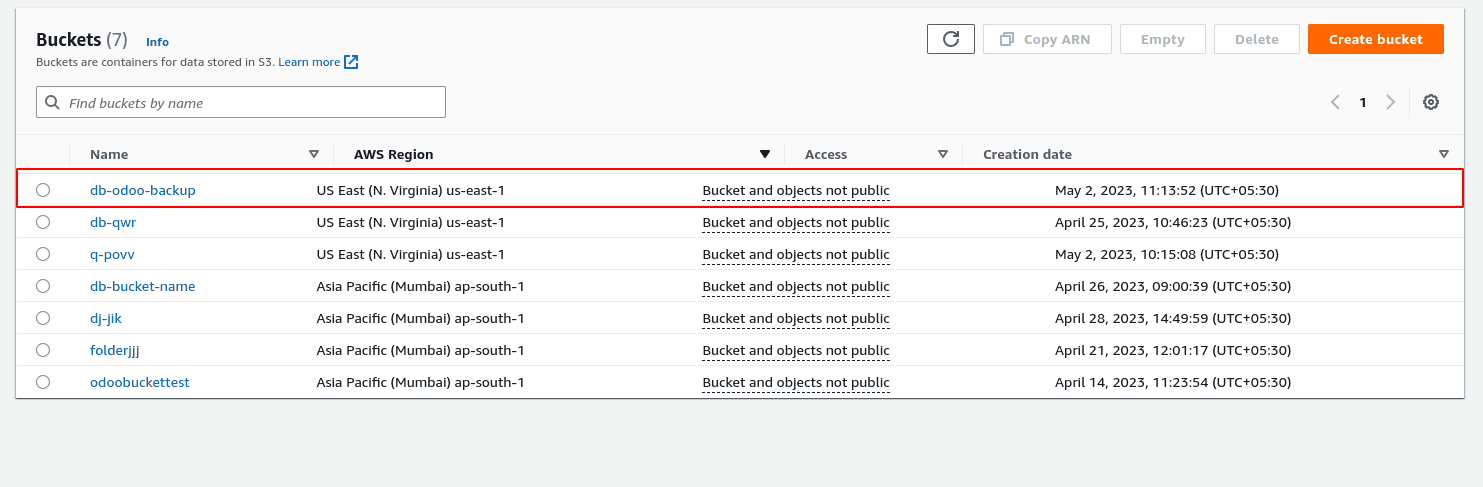
Step 4: Configure Backup in Odoo
- In the Odoo Backup Configuration interface, select "Amazon S3" as your chosen backup destination.
- Enter the following critical details:
- Amazon S3 Access Key
- Amazon S3 Secret Key
- Bucket Name (the exact name of the bucket you created in Step 3)
- File Name (the desired folder name within the S3 bucket where backups will be stored)
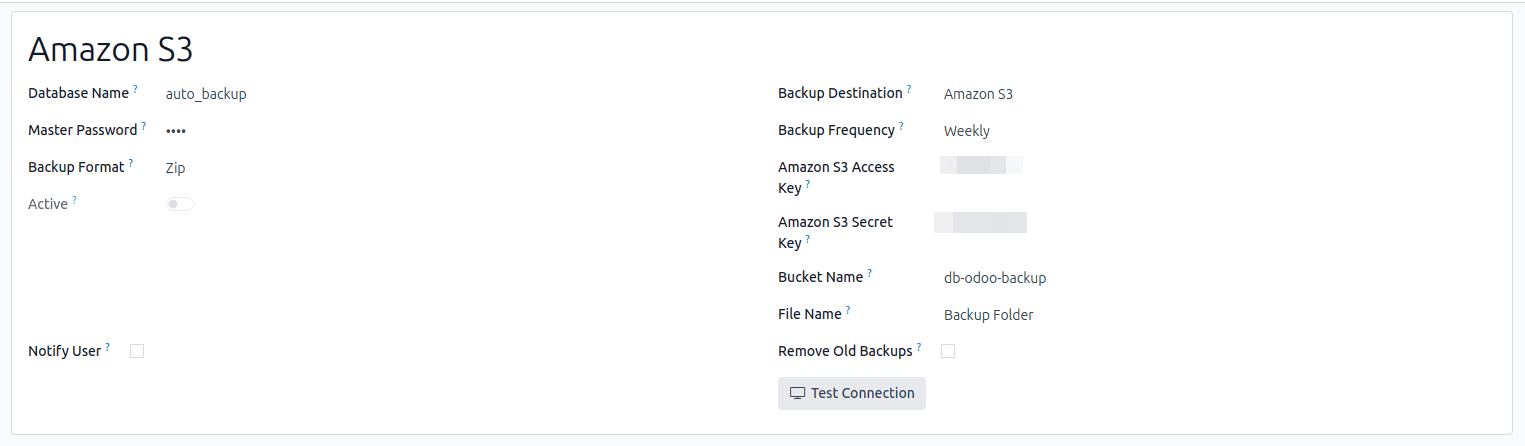
Step 5: Test Connection
- Click on the "Test Connection" button to thoroughly verify that the S3 setup is correctly configured and operational.
Automated Management of Old Backups
To maintain optimal storage efficiency and prevent the accumulation of outdated data, the module includes an invaluable auto-remove feature. By enabling this option, old backup files are automatically purged from your storage destination after a user-defined number of days. This proactive management ensures that disk space is utilized effectively and that your backup archives remain streamlined, containing only the most relevant recovery points.
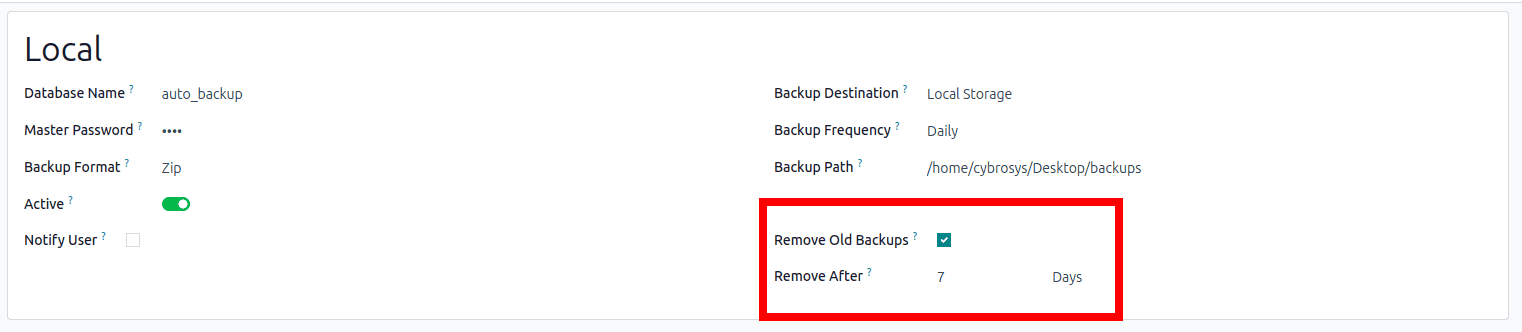
Real-time Notifications for Backup Status
Staying informed about the operational status of your backup processes is critical for maintaining data integrity. By enabling the "Notify User" option, a designated administrator or team member will receive instant email alerts detailing the outcome of each backup operation, whether successful or failed. This real-time monitoring capability empowers administrators to swiftly address any backup failures, minimizing potential data loss and ensuring continuous data protection.
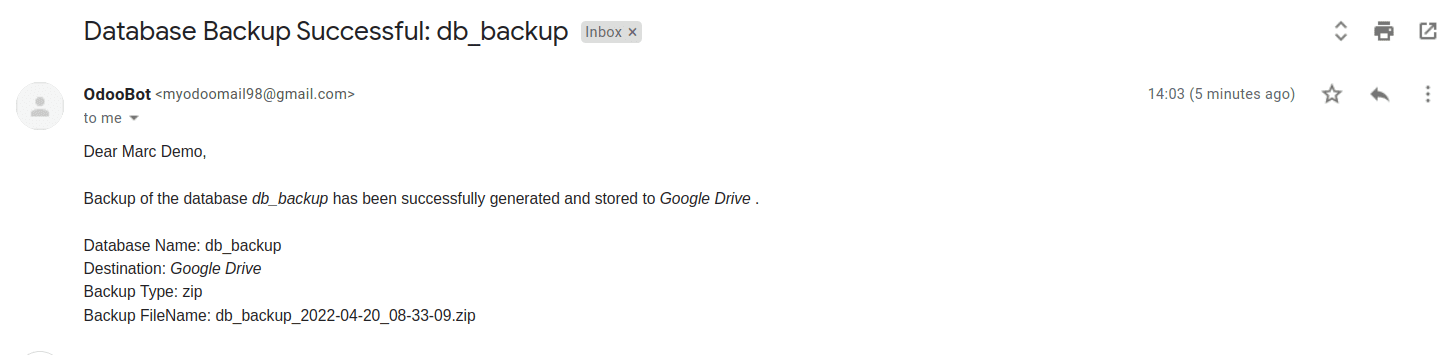
Successful Backup Notification Email
An example of a successful backup notification email is shown below, confirming the completion of the backup process:
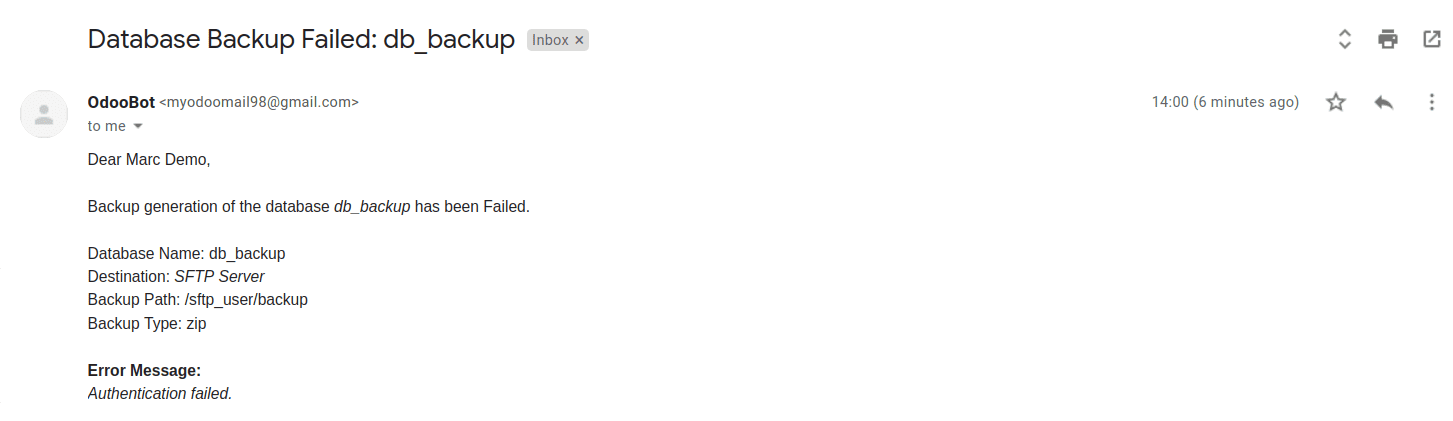
Failed Backup Notification Email
Conversely, in the event of a backup failure, an email alert will be dispatched to the specified user, providing crucial information for troubleshooting:
Scheduled Actions for Automated Database Backup
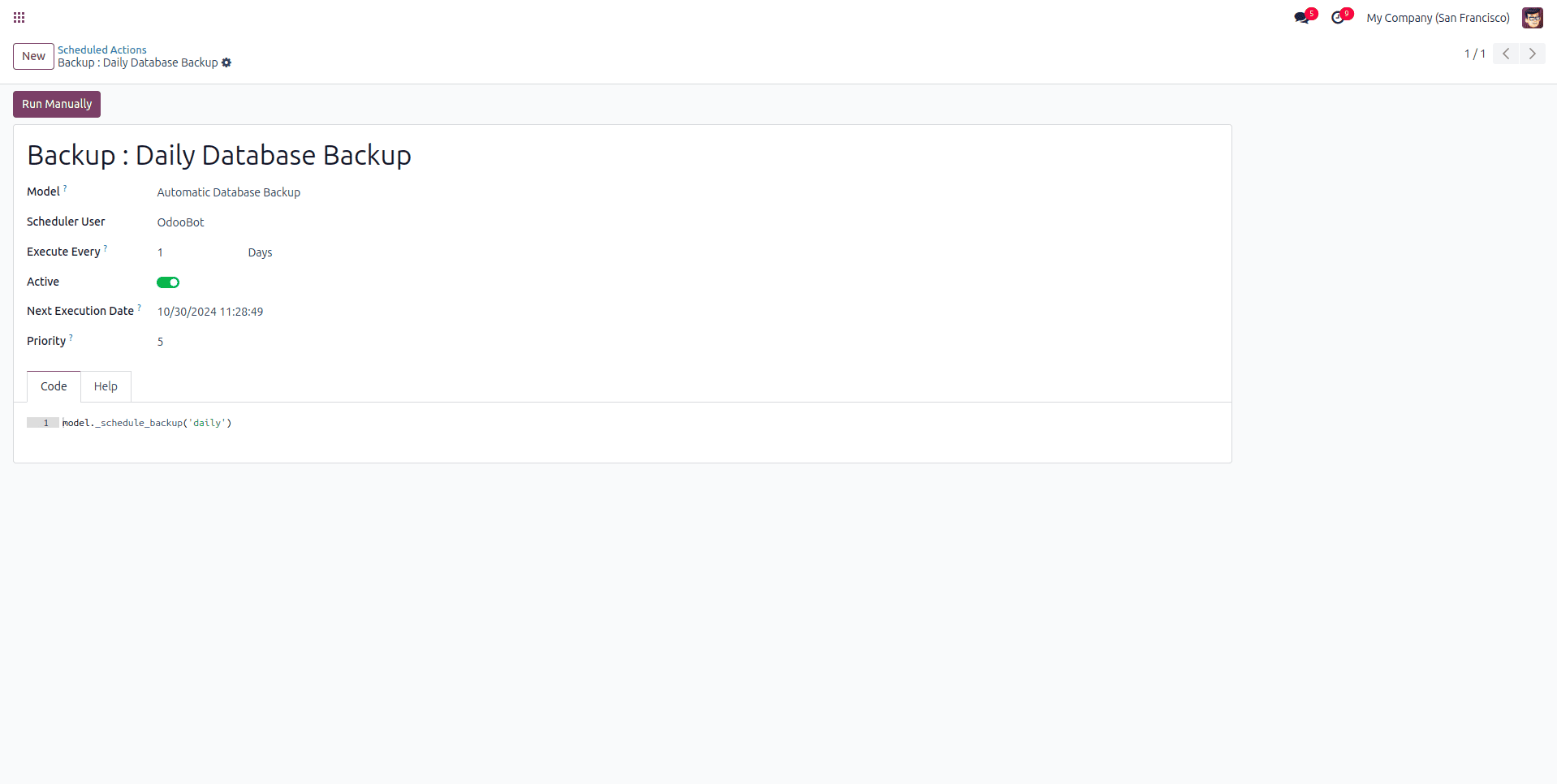
The automated backup solution in Odoo 18 operates through pre-configured scheduled actions, which are designed to execute the backup process at your chosen storage location based on defined intervals. These intervals ensure consistent and reliable data protection:
- Daily Backup: This action runs every day, guaranteeing that your Odoo database is backed up frequently, thus providing the most up-to-date recovery points.
- Weekly Backup: Executing once a week, the weekly backup provides a balance between frequent snapshots and efficient storage usage, ideal for periodic data protection.
- Monthly Backup: This action runs once a month, serving as a crucial component for long-term data retention strategies and archival purposes.
To ensure robust and automated data protection, it is essential to activate these scheduled actions. They will then execute backups precisely according to the frequency defined in your backup configuration settings, seamlessly integrating into your Odoo operations. You can select the specific scheduled action that corresponds to your desired backup frequency.
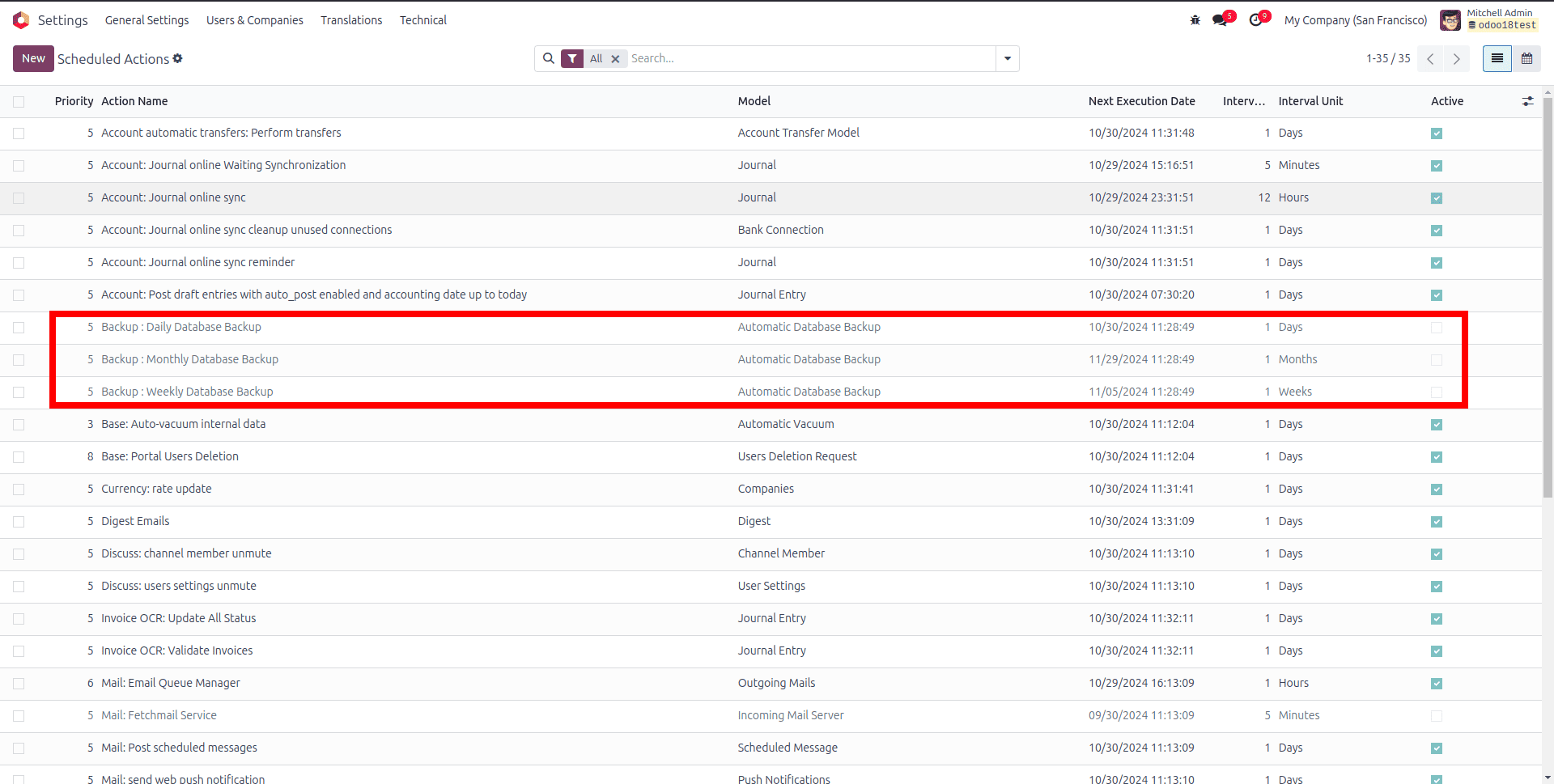
Once selected, activate the scheduled action to enable its automatic execution. For immediate testing or specific ad-hoc needs, you also have the option to click 'Run Manually' to trigger the backup process instantly.
Implementing an automated database backup solution for Odoo 18 is a fundamental step towards comprehensive data protection and robust business continuity. By automating the backup process across a versatile range of storage destinations—including local servers, remote servers, and leading cloud services such as Google Drive, Dropbox, OneDrive, Nextcloud, and Amazon S3—organizations can effectively safeguard their critical Odoo data.
This advanced solution significantly enhances data security, optimizes storage utilization, and strengthens disaster recovery capabilities. Key features like customizable scheduled backups (daily, weekly, and monthly), automated removal of outdated backup files, and real-time email notifications collectively ensure a highly efficient and reliable data protection strategy. Regardless of whether you operate a large enterprise or a growing small business, a feature-rich backup solution ensures that your Odoo database remains consistently protected, thereby minimizing the potential risk of data loss and costly downtime.
Adopting such a module provides invaluable peace of mind, assuring that your crucial Odoo backups are not only fully automated and securely stored but also readily accessible whenever they are needed for restoration or auditing purposes.